In the past, I have mentioned the tremendous need that the American Muslim community in Philadelphia has for social services such as shelters, schools, reentry programs, job training, conflict resolution, counselign services, and food banks. There are many people starting programs, and whenever I see something of promise I try to promote it because it gives me hope. One, it reminds me that there are people who are dedicated and are committed to improving our community and contributing to society. Two, because these efforts are signs of positive growth within our community. Just today, I learned of another project that put a smile on my face. It is a fundraising project for a senior housing development from the MECCA CDC (Masjidullah Economic Community Corporation of America).
About the Jewels of Islam
Hajja Rafiqa Abdul Rasheed, M.S., Founder and Coordinator of the Jewels of Islam Program met with Hajjah Fatimah M. Ali and Hajjah Shahidah Ali Muhammad, Co-Founders, in her home to plan the program which was first called the Older Muslim Women’s program. The first meeting was held at the Wynnefield Cultural Center in Philadelphia, PA in June, 1989.
After that meeting they started to search for a permanent location to have their meetings. Hajja Rafiqa wrote letters to a number of Masjids, and Hajjah Fatimah spoke with Imam Abdul Aleem who was the Imam at that time at Masjidullah. He was the first to respond and said we could have the program which became known as the Jewels of Islam at Masjidullah.
The Jewels of Islam Program is for older women 50 years and older. There are 108 members and 1 volunteer under 50. The program has operated as an all volunteer senior program for older adult women for the past 20 years. The age range of the members is 50 to 96. Jewels members reside in Pennsylvania, New Jersey, Delaware, Arizona, North Carolina, and Georgia. The program has Islamic, educational, nutrition, health, supportive, recreational and intergenerational activities.
A variety of professional speakers in the field of aging address members on topics pertinent to the older adult population. And, the Jewels of Islam have been active in having a multiplicity of fundraisers towards the senior housing development effort.
Just as we need to focus on our youth, we have to honor our elders and build upon the legacy they have left for us. They have so much wisdom to give and owe them so much for making it possible for us to be comfortably Muslim in America. I hope that many of you can give to Muslim foundations and help them build endowments. We really need to look to Muslim institutions such as the awqaf system in order to increase our sadaqah. By helping build a waqf, you are planting a tree that will shade weary travelers and yield fruit that can feed generations. Our schools, masajid, charities, and scholarship organizations shouldn’t have to live precariously month to month begging for what they need. Ultimately, this is why we need savvy Muslims who are adept at business (and ethical) who can help build endowments. InshaAllah through efforts like Jewels of Islam, we can move beyond just talking the talk, but walking the walk. We can show how Islam is a mercy and that Islam provide comfort and relief not only just to its adherents, but to the society as a whole.
The Muslim blogosphere was a place where many people could speak freely. It has brought people together, started a flowering of intellectual thought, and gave expression to thousands of Muslims. People whose voices were rarely heard, especially on the minbar, were now capturing the attention of Muslim leaders. It didn’t matter if you earned a PhD from Harvard or with your GED, whether you graduated from Azhar and became hafith al Quran or your weekly MSA halaqah and knew three surahs, whether you had an ijaza to teach Maliki fiqh, or you just took shahada and and only read the first chapter of the Halal and Haram in Islam, whether you were renown for your piety and scrupulousness, or just wrote a post with your live-in girlfriend reading it over your shoulder, everybody could weigh in and say something. Practicing and non-Practicing Muslims, cultural nominal Muslims and the devout, Salafi, Sufi, Sunni, Shi’ite, all have a stake in the public discourse on what is authentically Islamic. While that public conversation yielded some fruitful dialog, there have been many times when the exchanges have sown seeds of discord and created greater rifts. People have been slandered, backbit, and insulted, in addition to whole communities misrepresented, and misinformation disseminated. Enmity developed out of heated exchanged even though the people would have likely been friends if they knew each other in person. The anonymity of the blogosphere has allowed for people to write with a type of violence and hostility that they would never display in their docile lives in their cubicle workspaces. And sometimes people may read into an email exchange or post some type of negativity when none was intended. All-in-all, the blogosphere is like an Afghan meadow, beautiful but full of mines.
Ever wonder why you don’t see our ‘ulema involved in online disputes? Numerous imams and scholars have discouraged their followers from spending too much time online because of its unsettling content and endless flame wars. Thinking back to the years when I used to spend an inordinate amount of time in petty spats in the blogosphere, I have a sense of regret. One, for the waste of time. Often, I knew that I wasn’t going to convince the person I was arguing with that their stance stood on shaky grounds. I was often more concerned about the general audience who may read a post. When it came to the posts about gender, ethnicity, or Islam, I worried that some unquestioned statement would damage someone’s self image and cause them to question themselves. I know how demoralized I felt growing up when I came across to a racist stereotype and did not have the tools to dismantle it. As my training as a writer developed, I engaged in many public battles. I wont battles, but never a war. I noted how people often didn’t really engage in what I was trying to say. They had their preconceived notions, often about me, that influenced whether they were receptive to what I had to say. I found that the the two camps on any issue were already entrenched.
Second, I think back with regret over the way I treated some people. There were times when I could have been not so heavy handed with people who were less informed about an issue than I was. Being proved wrong can be humiliating. There were a few times I knew I had basically gave somebody the intellectual smack down. Nobody who has good intentions wants be called out for being prejudiced. And there were times when I argued that someone was a bigot, a sexist, etc. Things I wrote in the past rubbed people the wrong way and I know that I will continue to write things that many don’t agree with. But now, as I mature and am comfortable with who I am, I am concerned with the method of how I share my thoughts. My brothers and sisters have rights over me, just as I have rights. And each of us have the right to not be harmed, physically or emotionally. The rights that we have over each other are meant to bring us together in our shared humanity. Unfortunately, because we lack adab, etiquette, our conversations can spiral out of control.
Imam Ghazali writes:
Silence includes abstaining from contention and contradiction whatever your brother talks about.
Ibn Abbas said: Do not dispute with a fool, for he will hurt you; nor with the mild man, for he will dislike you. The Prophet (God bless him and give him Peace!) said. If a man gives up contention when he is in the wrong, a house will be built for him within the Garden of Paradise; but if a man gives up contention even when he is in the right, a house will be built for him in the loftiest part of the Garden.” While it is his duty to give it up if he is in the wrong, the reward for what is above duty is made greater. For to remain silent when one is right is harder on the soul than keeping quiet when one is wrong. Recompense is in proportion to the effort.
The most serious causes that fan the fire of ranour between brothers are contention and disputation. These are the very essence of variance and rupture. For rupture starts off with opinions, then becomes verbal and finally physical.
The Prophet (Peace be upon him!) said: Do not fall out one with another, do not hate one another, do not envy one another. Do not break off one with another. Serve God as brothers. The Muslim is brother to the Muslim. He does not wrong him or offend him or forsake him. A man can do no worse than disgrace his Muslim brother.
The worst disgrace is contention, for if you reject what another says you accuse him of ignorance and stupidity, or of forgetfulness and absent mindedness in understanding his subject. All this contitutes disgrace, annoyance and alienation.
According to the tradition of Abu Umama al-Bahili:
God’s Messenger (God bless him and give him Peace) came out to us as we were disputing. He was angry and said. “Give up contention because there is little good in it. Give up contetion because the use of it is small, and it stirs up enmity among brothers.”
One of the early believers said, “If a man quarrels and disputes with his brother his manliness diminishes and his virtue goes.
Imam Ghazali was not alone in advising us to avoid quarreling. Haddad writes:
Beware of arguments and wrangling, for they cast rancour into the breasts of men, alienate hearts and lead to enmity and hatred. If anyone argues against you and has right on his side, accept what he says for truth must always be followed. If on the other hand he is wrong, leave him, for he is ignorant, and
God has said
“And turn away from the ignorant.” [vii :199]
The Quranic advice to turn away from the ignorant, and even telling disbelievers “To you, your way, and to me mine,” is extremely helpful. I use this advice in avoiding spats with Islamaphobes. There is clearly wisdom in walking away from a dispute, even if you know truth is on your side. Once you have reminded someone of the doing the right thing, or a correct stance, or warned them with good advice, you have done your service. If they wish to dispute, it is better to go about your business.
But sometimes arguments are unavoidable. Debates are important during this Age as Muslims are assessing institutions and practices, trying make their Islam relevant towards solving their world’s problems during this tumultuous time. But out of these debates arise many conflicts between religious authorities and lay people. A number of scholars have taken a stab at creating pacts of mutual respect. But many people don’t respect it for fear of losing their autonomy in interpreting Islamic beliefs and practices. A respected Muslim noted that the primary cause of the fragmentation of the Philadelphia Muslim community is due to how we deal with conflict. We have heated spats and then go through avoidance. Although there are polemical battles, the muslim community has done little in the way of conflict resolution. It is apparent that conflict resolution, or lack thereof, is a major problem in the Muslim world. Just look to Iraq, Afghanistan, Somalia, and Pakistan to see how Muslims are at each other’s throats.
The politics of disagreement has wreaked havoc on our interpersonal relationships, on our communities, and the entire ummah. I think we can turn to a little advice from career coaches, management consultants, and community builders to see how we can effectively deal with conflict. Multi-national corporations, international agencies, and nation-states use similar methods in negotiating pacts, laws, and deals. Politics is all about negotiating conflicting interests. I did a little internet research and found a few sites that outlined strategies for dealing with interpersonal conflict. An article on Mind Tools, a site for Career development, outlined some of the theories for conflict resolution. I thought it would be useful to bring them here:
The “Interest-Based Relational Approach”
…Commonly referred to as the “Interest-Based Relational (IBR) Approach“. This conflict resolution strategy respects individual differences while helping people avoid becoming too entrenched in a fixed position.
In resolving conflict using this approach, you follow these rules:
Make sure that good relationships are the first priority: As far as possible, make sure that you treat the other calmly and that you try to build mutual respect. Do your best to be courteous to one-another and remain constructive under pressure;
Keep people and problems separate: Recognize that in many cases the other person is not just “being difficult” – real and valid differences can lie behind conflictive positions. By separating the problem from the person, real issues can be debated without damaging working relationships;
Pay attention to the interests that are being presented: By listening carefully you’ll most-likely understand why the person is adopting his or her position;
Listen first; talk second: To solve a problem effectively you have to understand where the other person is coming from before defending your own position;
Set out the “Facts”: Agree and establish the objective, observable elements that will have an impact on the decision; and
Explore options together: Be open to the idea that a third position may exist, and that you can get to this idea jointly.
By following these rules, you can often keep contentious discussions positive and constructive. This helps to prevent the antagonism and dislike which so-often causes conflict to spin out of control.
There are numerous ways we can deal with disputes, but is clear that we should derive our understanding from the Quran and Sunnah. We should work within our own tradition, taking the advice of Imam Ghazali, who helped revive the Faith during a time of tumult. We can also build upon it by drawing practical lessons that are in line with the spirit of religion. First, we should ask ourselves how our Messenger dealt with conflict. What was his adab when correcting or enlightening someone? How did he treat people? And then we should find ways to inculcate those values and practice them. My husband highlighted the hadith in which our Prophet said, “My community will not agree upon an error.” In unity, there is strength, but in our divisiveness and discord we have weakened ourselves and have committed many errors.
Sometimes I hear news that reminds me of the passing of an era and the fragility of our existence. The most recent natural disasters, the earthquakes in Haiti and Chile, are obvious examples. But there are also personal reminders. The toddlers I used to carry on my hip are now in college and having their own children. My students pretty much consider the Space Shuttle Columbia, the first Gulf War, Glasnost, Reagan, and the Rwandan genocide ancient history. And stars that I danced and sang to as a little girl are passing away. Today was a chilling reminder for me, Guru is in a coma following a heart attack. I think it especially hits me because his hey day was during the height of my youth. While I can look back fondly at memories like these:
I can’t be too nostalgic and romanticize my teen years. A while back I wrote this post about this song and the profound influence that Hip Hop and Islam had upon me. The giants of my youth are reaching middle age and a chapter of my life is closing. Although the years I spent in school contributed to a sense of extended adolescence, I’m glad I finally grew up. I can’t sleep on the on the imminence of meeting my Maker sooner rather than later. I know that my Lord will ask me what did I do with my time. I know that He will ask me did I live my life to the fullest, cherishing each precious moment and opportunity.
My mother was an excellent cook and we almost always had home cooked meals. I grew up in a multi-cultural home ( a very interesting mix and sometimes clash of culture of Black American, West Indian, and White). We were used to sharing food with our neighbors and friends, living in Filipino immigrant and predominantly Mexican neighborhoods. My mother made soul food, West Indian food, and classic American dishes. Even now, she can throw together Vietnamese soup or Pansit (a Filipino noodle dish). As a little girl I remember the wide array of dishes, from fried or baked chicken, chicken dumplings, curried goat, salt fish, pilau, beef stews, steaks, boiled crabs, fried fish, bbq ribs, and stir fries. I love cooking. So many of our family celebrations and gatherings involve cooking for birthdays, celebrations, and holidays. Sometimes the meals were impromptu, where my brother would go and pick out live crab from the Asian market and buy some steaks, potatoes, and salad from the grocery store. My brother is a good cook and outside of my grandmother, he makes the best fried chicken ever.
In addition to us both having a sweet tooth, my husband and I share eclectic pallets. And we get to indulge, living in a neighborhood full of wonderful halal restaurants specializing in food from Morocco, Senegal, Lebanon, and America. While the food is good, I find that home cooking is easier on the stomach, as well as the wallet. But sometimes I don’t feel like cooking, my body rebels and my mind shuts down the creative process necessary for composing a master piece. On those days, we can go to Saad’s, Kilimanjaro or Halal Bilal’s. It is tempting to eat out all the time, but I try not to. Since I started teaching full time in October, I don’t have much time to prepare the elaborate dishes I used to make during the week. But I still try to find time to squeeze in some home cooked food. Last year, one of my first friends in Philadelphia, Safiyyah, bought me and my husband a crock pot as a house warming gift. It has given us countless meals that have given us sustenance and comfort. Each time I make a meal using the crockpot, I think of my sister with gratitude. I just wanted to thank her publicly for her warmth, graciousness, and hospitality. Please make du’a for our sister who has helped me and so many others.
I’m not able to make a comment on a blog where I offended the blog owner. As a Muslim, I think it is important to apologize to your brothers and sisters if you say something that is harmful. I have offended my both Yursil and Aaminah on her blog post, Response to Some Responses to Yursil’s Series of Posts. Yursil’s original post can be found on his blog with the first in the series titled, Surburban Capitalist Islam-List of Beliefs. I did not comment on Yursil’s blog because I had little problem with his critique of various institutions and practices. But I did discuss his response to my weighing in on a conversation that spun off from his series. It was never my intention to injure anybody’s spiritual family member in her own house. Writing in a public forum, I assumed that all parties were aware of the various critiques. Although my intention was to explain my position, it was a lapse on my part. I assumed the author was aware of the ongoing debate because the post was a response to the responses. Although my comment was a side note, I did believe that by proxy the blogger shared similar views about my historical perspective and academic training with Yursil. Finally, I assumed Yursil would be aware of my public comments about our public exchange on Marc’s post here. Commenting on my own blog is by no means an attempt to further the offense, but rather to make a public apology following a public reminder. I hope I’m not a scourge or silencing anyone’s voice by doing so.
Your striving for what has already been guaranteed to you, and your remissness in what is demanded of you, are signs of the blurring of your intellect.
Ibn Ata Allah, Kitab al-Hikam
Being the consumate pessimist, I know all about the ways worrying and brooding can bring someone down. My first memories were shrouded in a profound sense of loss with the passing of several close family members months of each other. In the years following, I, like many other sensitive children, had learned to live with sadness and isolation. I was hard on myself and my family always had high expectations for me. Growing up, many of my dreams, hopes, and aspirations did not come true. Whatever I did attain did not come with ease. In fact, most of my adult life was spent overcoming some obstacle or challenge, dealing with some disaster’s aftermath or fall out, or strategizing to avoid some impending doom. I struggled and the struggle became part of me. Frankly, it was exhausting. I’ve spent many years seeking spiritual guidance, only to find that emotional issues which came from my experiences have been major blockages to that type of development. I think a major break for me followed some of my harrowing experiences in the MIddle East when everything came together despite the precarious situations I had been in. During that time, I was exposed to the wisdom of Ibn ‘Ata Allah. Many of his aphorisms addressed issues such as anxiety, sadness, and spiritual despair.
Working with teachers and community leaders, I find that many of us are plagued by many of these negative emotions. Hence, our spiritual development has been hampered. Many Muslims aren’t entirely happy, or we don’t allow ourselves to be. We are often worried, stressed, and unsatisfied with the state of affairs within the community, our lives, and the broader world. In fact, much of our community work comes from dealing with fear or malaise, rather from enjoying working in the community because one, we’re doing it for our Lord, and two, being around our brothers and sisters brings us much comfort. Often our conversations over supposed relaxing dinners are full of complaints, criticisms, and pessimism. “Muslims aren’t doing anything right.” “Muslims everywhere are humiliated.” “Everyone hates us.” “We are all fractured.” “Our communities are falling apart.” “We are losing our children” “Nobody is living the true spirit of Islam.” etc etc. Our general negative attitude, hyper-criticism, hyper-intellectualism, self-righteousness, and self loathing have all contributed to a bunch of unhappy people. After hearing adult Muslims complain so much, there is no wonder why our kids are bouncing out of our communities. We are not providing happy examples where Islam is a solution, where we are satisfied with our Lord.
I’ve complained about many things in the past. And I’ve spent many years worrying about everything coming in the future. My blog is also a bunch of critiques and analysis of many social problems. Despite these complaints, my quality of life has improved so much since I’ve been Muslim. I have gained so much meaning in my life that I would never have had if I chose a different faith. I have found a wonderful husband and have met amazing friends from all over the world. One friend who is non-Muslim commented that by becoming Muslim I have become closer to my true self than I had ever been. I have travelled and seen things that I would have never dreamed of. Allah has been good to me and nothing I can ever do could warrant such mercy. The only thing I can work on is becoming happy.
I know it is hard for many of us. And I don’t want to sound hokey. But my hope is that each one of us finds a way to lift up our spirits. There are numerous things that we can do to make ourselves a bit happier. I found a few suggestions in this article,Five Things that Will Make Your Happier
Here are five things that research has shown can improve happiness:
1. Be grateful – Some study participants were asked to write letters of gratitude to people who had helped them in some way. The study found that these people reported a lasting increase in happiness – over weeks and even months – after implementing the habit. What’s even more surprising: Sending the letter is not necessary. Even when people wrote letters but never delivered them to the addressee, they still reported feeling better afterwards.
2. Be optimistic – Another practice that seems to help is optimistic thinking. Study participants were asked to visualize an ideal future – for example, living with a loving and supportive partner, or finding a job that was fulfilling – and describe the image in a journal entry. After doing this for a few weeks, these people too reported increased feelings of well-being.
3. Count your blessings – People who practice writing down three good things that have happened to them every week show significant boosts in happiness, studies have found. It seems the act of focusing on the positive helps people remember reasons to be glad.
4. Use your strengths – Another study asked people to identify their greatest strengths, and then to try to use these strengths in new ways. For example, someone who says they have a good sense of humor could try telling jokes to lighten up business meetings or cheer up sad friends. This habit, too, seems to heighten happiness.
5. Commit acts of kindness – It turns out helping others also helps ourselves. People who donate time or money to charity, or who altruistically assist people in need, report improvements in their own happiness.
Lyubomirsky has also created an iPhone application, called Live Happy, to help people boost their well-being.
Following some of this advice is especially hard for someone like me. But I’m working on it. Sometimes we human beings choose to live in our own righteous indignation.But being grateful has always picked up my spirits. So, I’m definitely going to follow that advice. I especially relate to finding your strengths and knowing who you are. Be kind to others and give to those who are less fortunate. We should think about someone who has helped make a difference in our lives. Remember the saying “He who does not thank people, does not thank Allah.” My husband points out that we as Muslims, are not supposed to be pessimistic. Even if we think it is the last days, we should still plant our crops. We should still work hard on creating lasting institutions that will leave a positive impact on this society. We can’t just pack it up and call it a day. Even though things may look bad in the Ummah, we can’t become paralyzed by wallowing in despair. As believers, we have to look on the positive side with hope that Allah will guide us. We are supposed to be the best amongst people. But so much fitnah is caused by the politics of despair. Let’s not be so critical of others. Fault finding leaves a bad taste in everyone’s mouth. We’re not all doing everything wrong. Some people are really trying and there are things that are working. Nor should we be hyper-sensitive about critiques against ourselves if we are willing to critique everyone else. We should constantly take assessments of what we’ve done wrong, but also take into account what has been done right. I’m not saying that we should follow all pop psychology blindly. But this study is really reinforcing common sense. But as one of my colleagues pointed out: Muslims aren’t using their common sense much lately.
Lionel Richie was rightfully hesitant to rerecord “We Are the World,” the 1985 global anthem he wrote alongside Michael Jackson to fight famine in Africa.
More than 40 artists under the umbrella USA for Africa joined to record the tribute that raised more than $60 million.
Richie felt the song was iconic and should not be revisited,
With the state of music today, I understand.
…but he changed his mind after the recent devastation in Haiti following the tragic 7.0 earthquake in January that left more than 100,000 people dead and millions displaced.
I feel your pain Lionel as the new version hurt my ears at times. Sometimes in life, we have to make difficult decisions. I was moved by the 1985 original below:
The new version is here (warning: video features auto-tune and Wyclef):
Despite the musical travesty, Haiti still needs your help. I urge you to give to world25.org. We can help the people of Haiti and, perhaps, put Wyclef out of his misery.
While Philadelphia has always been my favorite East Coast city, I sense that this environment has sucked the life and dreams out of its people. When my husband and I went to Harlem a few weeks ago we noticed that the demeanor of New Yorkers was different from the demeanor of Philadelphians. I saw a little more pride in the way women carried themselves and the men groomed themselves. I’m not trying to paint a rosy picture of Harlem. I saw my share of nonsense, including discovering a firearm in an unlikely place. But that’s another story for another day. New York has its grime, but it is not as gloomy in disposition as Philadelphia. Despite what the Chicago School says, no one city is emblematic of the condition of the inner city or state of Black America. But there is one city that embodies the condition of Black American Islam more than any other: Philadelphia.
Philadelphia is full abandoned buildings, where authorities don’t expend the energy or resources to demolish burned out shells. I’ve written about the state of urban decay and it’s demoralizing effects in the past. I’m not trying to tear this city down without imbuing new meaning. It is easier to critique a faulty construction and let it crumble due to misuses with misuse than it is to retrofit a decaying edifice and give it new life and meaning. I’m reflecting on this place because there is so much at stake here. Philadelphia Muslims, including recent transplants such as myself, must seriously take stock of these self-destructive tendencies. Everyday I go to work, I think about how can I work within Muslim institutions and contribute to the edification of our youth. Sometimes moral and spiritual renewal requires refurbishing old buildings, so that a place maintains its historic character. But some places are so damaged or their foundations are so weak that the entire area must be leveled. Sometimes we have to just start over, rather than bolstering something that is much more of a liability for the people it is trying to help.
This is the case for Philadelphia Muslim institutions: there are no Muslim run soup kitchens, not a single shelter for abused women that caters to Muslim women’s needs, and very few social programs, such as conflict resolution or treatment programs, let alone re-entry programs for ex-convicts. There are no services for elderly Muslims, so that they may have halal meals on wheels. Nor do our shiftless young men run errands for the elderly who may not be able to go outside during the hazardous winter storms. Once upon a time, Black American Muslims were seen as a positive benefit to the community. Islam was supposed to be transformative in the lives of people.
However, I am hearing increasing stories of people who have found ways for Islam to justify their proclivities rather than leave a positive impact on this Earth. The Black American Muslim community, just like immigrant Muslim communities, is not immune from the social ills of the broader society. I can save my observations of the colonized mentality within immigrant communities for another day. But today I want to focus on problems that are evident within the Black American Muslim community. In many ways, it is more vulnerable than the other communities. Just as so many Black Americans have grown complacent, so have many of our Black American Muslim youth. This complacency is not out of comfort or self satisfaction, but comes from being broken: “I will never overcome this or that.” It comes from being so damaged and having no sense of self worth. “I don’t deserve better.” It comes from being conditioned into certain patterns of behavior. “Why even try?” But this complacency is wrapped up in self-righteousness. “I’m not focused on the dunyah.” Laziness is dressed up in opposition to non-Muslims. “I don’t want to work for the kuffar.” Lack of drive is costumed in resistance against exploitation and corruption. “I want to earn a halal means.” The reality is that it is the same shiftlessness from the dominant ignorant culture (i.e. modern Jahiliyyah ) dressed in a thobe and topped with a kufi.
This shiftless behavior is most frequently seen in our young Black Muslim men who have distorted notions of manhood and masculinity. There is a corrosive culture of masjid masculinity that combines the patriarchy that can be found within Muslim societies and the misogyny in Black American culture. It finds its justifications for anti-women behavior within Middle Eastern culture. The only problem is that these same brothers often miss the redeeming aspects of Middle Eastern culture, such as honor and notions of manhood tied to providing for their families. Some Black American Muslim men who make their wives work or worse yet, welfare recipients, while they do nothing to support their families. There are even brothers who have their wives work in the US while they study “sacred knowledge” overseas. Some Muslim men will justify their promiscuity within Islam as they constantly chase women and divorce more women than they can count. Similarly, there are women who make concerted efforts at developing relationships with married men and breaking up families. There are women who can’t keep track of their fathers of their children. They hide behind niqab when they get free tuition at the Muslim school, but spend their time posting half naked pictures on myspace looking for the catch of the week. I’ve heard stories of Muslim women jumping other Muslim women in Wal-Mart parking lots. I’ve heard stories of Muslim women following other Muslim women because they have beef.
I’m not just trying to be a sensationalist. My guess is that for every one of these ghetto-Islam stories, there are 10 stories of personal transformation. People make mistakes. Most of us have had our spells of backsliding, but the problem is when institutions do not address problems that are a detriment to community building. To be frank, in many Muslim communities in Philadelphia, there is an undercurrent of gangsterism. That, within itself, has allowed for much of the destructive tendencies in the community to grow and propogate. The destructive nature of the predators and criminals becomes most apparent when you work with children, because they are the most vulnerable. Some of my friends are teachers who work with children with serious psychological and emotional problems that have stunted their ability to socialize and even learn. Unfortunately, we throw a hijab on most of our problems. We point fingers at infidels, deviants, and hypocrites without looking at our own failure to inculcate the true meaning of Islam in transforming our lives. We don’t see the damage that we do to others in the wake of our own self-destructive tendencies.
I’ve only touched on a few issues. But working within a community day in and day out really opens your eyes. We Black American Muslims must have some difficult conversations. We will have to discuss our failures on an individual level and a collective level. We will have to examine how we others and, importantly, how we failed ourselves. This is where humility must be inculcated, because if we are not self reflective and open to accepting blame then we have no hope for making changes. Then we must make some painful choices about our institutions. I am not saying that I have all the answers. None of us do, but we need to start address the problems meticulously. I don’t think swinging a sledgehammer blindly and without a plan will help. Once we address them, we have to have a plan of action. This is not just cleaning up our own backyard; this is cleaning up our streets. We might love our childhood homes, but they may have to be completely leveled so that we can rebuild. The renovation process may mean that the way we used our old edifices must be completely rethought. And anybody that’s been through a renovation knows that is a messy process fraught with all sorts of hazards. Knowing full well that we will make mistakes as we continue this beautiful experiment of Islam in America, we must move forward with hope as we constantly seek guidance from our Lord.
Some places haunt you. They haunt with disturbing tales, tragedies, injustice, and outrage. They leave you with a sinking feeling, doubting humanity. Some places make you wonder how do people have faith and hope, how do they still strive to live dignified lives in the face of a long legacy of atrocities? Although I’ve never been there, ghost tales from the Democratic Republic of the Congo haunt me. I tread lightly on this subject, with full knowledge of the Western tendency to pathologize Africa. The Congo is by no means the portrait that Joseph Conrad paints in the Heart of Darkness. In his critique of Conrad in “An Image of Africa: Racism in Conrad’s ‘Heart of Darkness,'” Chinua Achebe writes, “Heart of Darkness projects the image of Africa as ‘the other world,’ the antithesis of Europe and therefore of civilization, a place where man’s vaunted intelligence and refinement are finally mocked by triumphant beastiality.” It is no surprise that Conrad’s novel is part of the western canon, continually reifying an image of a savage Africa. Of course, our critiques of Conrad’s racism make our analysis of his work more nuanced.
Many people imagine the entire continent as a wild place, where lions and elephants roam. When I travelled to North Africa, I answer questions from some friends and family members about lions and giraffes. I assured them that throughout Africa, there are skyscrapers and busy streets, international ports, airports, universities, and cell phones. But there are conflict zones and failed states where the government’s monopoly on violence is only broadcasted to the perimeters of metropolitan zones. In rural outskirts, such as in Eastern Congo, citizens have little protection from rebels or the military who often become predatory and wreak havoc on the lives of innocent civilians. In places like the Democratic Republic of Congo (DRC), women and children suffer the most because they are the most vulnerable.
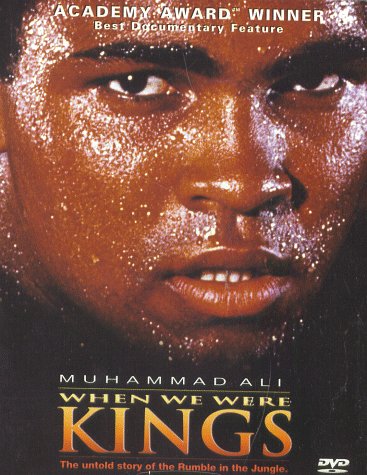
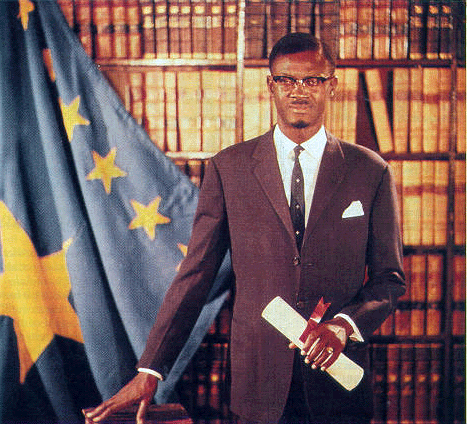
Some of us may know a little bit about the history of the DRC. It was once called Zaire and was ruled by a Mobutu Sese Seko for over 30 years. He was a US backed strong man who established totalitarian rule until his exile and subsequent death in 1997. Boxing aficionados may be familiar with the “Rumble in the Jungle,” the match between Muhammad Ali and George Foreman held in Kinshasa. Others, more familiar with anti-colonial resistance movements and interested in CIA conspiracy theories will likely be familiar with Patrice Lumumba.
Despite our superficial knowledge of the region, the Congo Basin has a long rich history. It has had over 500 years of intense contact with the West and was comprised varieties of African societies from large states to stateless hunter gatherers. The Kingdom of Kongo was a sophisticated, centralized society that comprised of northern Angola, Cabinda, the Republic of the Congo, and the western portion of the Democratic Republic of the Congo. In the late 15th century, Christianity was the state religion. As a major source of slaves for the Portuguese and other major European powers, many of us descendants of Africans in the Americas are, ourselves, ghosts of the Congo.
Although the current conflict in the DRC has some roots in the Rwandan genocide, the instability in the DRC can be tied to the colonial legacy under the Belgians and their instability during decolonization. Adam Hoshchild’s book brings to life Belgium’s King Leopold’s exploitation of the Congo Free state from 1885 to 1908. Some estimates say that Leopold’s policies resulted in a population reduction from 20 million to 10 million. After efforts to free the Congo Free State from King Leopold’ tyranny, the Belgians ineptly ruled the Congo. They did little to help establish a firm foundation as other European colonial powers, such as Great Britain and France sought to train Africans as civil servants in preparation for self rule. Instead, they pulled out all infrastructure as they left, damning the Congolese in their efforts to establish a stable democracy.
The ghosts of the Congo aren’t just dead and buried, people today still are affected by the brutal legacy of colonialism and the outcome of transnational conflicts involving Uganda, Rwanda and The Congo. Our own government can be implicated for our own hands in supporting a brutal regime. For numerous reasons, the DRC should be a top priority on international affairs. As I mentioned, so many foreign hands were in the pot and contributed to the legacy of violence and intimidation. There is clear documentation of atrocities and a clear need for humanitarian aid. Today, in an op-ed piece by the New York Times article titled the Capital of Killing, Nicholas Kristof told the harrowing story of a young woman who had been raped repeatedly by militias who use sexual violence as a tactic in their civil war. Kirstof compares the atrocities in the DRC to the Holocaust writing:
But so far the brutal war here in eastern Congo has not only lasted longer than the Holocaust but also appears to have claimed more lives. A peer- reviewed study put the Congo war’s death toll at 5.4 million as of April 2007 and rising at 45,000 a month. That would leave the total today, after a dozen years, at 6.9 million.
What those numbers don’t capture is the way Congo has become the world capital of rape, torture and mutilation, in ways that sear survivors like Jeanne Mukuninwa, a beautiful, cheerful young woman of 19 who somehow musters the courage to giggle.
The article goes on to tell of Jeanne’s struggle with fistula, a condition when the wall between the vagina and anus are destroyed. Fistula is very common among young women who are either gang raped or give birth before their bodies mature. The violence she experienced and the threat she is constantly under just as much due to the civil war, as the colonial legacy.
Sexual violence is one of the many atrocities that various groups have perpetuated against civilians. Whether or not we have some religious, ethnic, or historical ties, whether or not there are US interests in the region, whether or not we fully understand the complexity of the conflict, we should care about human suffering. There are countless people working to alleviate suffering. Many are trying to raise awareness to the crisis. Kristof highlited the work of one hero, Denis Mukwege. This doctor who worked to repair Jeanne Mukuninwa’s damage, as well as tens of thousands other women who have been literally ripped apart by this conflict. The following video is a thought provoking piece on Denis Mukwege’s work:
We must not turn a blind eye using some racist justification for our apathy. That was the type of apathy that allowed 800,000 people to be murdered in Rwanda. At the same time, we cannot be paternalistic in our efforts to help our brothers and sisters in Africa. It is important to listen to African voices so that we can find ways to alleviate the suffering without exacerbating the conflicts. We have to work with grass roots organizations to effect change. We have to understand the intersections between local, national, and transnational forces that have shaped the instability in Eastern Congo. And first and foremost, we must educate ourselves. In my next post, I will provide links organizations that continue to provide relief and support for the people of the DRC.
To remind us of our misguided attempts to construct an imaginary Africa, I close out with a now controversial poem written by Vachel Lindsay in 1913. Adam Hochschild borrowed a line from it for the title of that award winning book. We should remind ourselves that the racism that was prevalent in the turn of the 20th century often still rears its ugly head in the turn of the 21st century.
THE CONGO
A Study of the Negro Race
I. Their Basic Savagery
Fat black bucks in a wine-barrel room,
Barrel-house kings, with feet unstable,
[A deep rolling bass.]
Sagged and reeled and pounded on the table,
Pounded on the table,
Beat an empty barrel with the handle of a broom,
Hard as they were able,
Boom, boom, BOOM,
With a silk umbrella and the handle of a broom,
Boomlay, boomlay, boomlay, BOOM.
THEN I had religion, THEN I had a vision.
I could not turn from their revel in derision.
[More deliberate. Solemnly chanted.]
THEN I SAW THE CONGO, CREEPING THROUGH THE BLACK,
CUTTING THROUGH THE FOREST WITH A GOLDEN TRACK.
Then along that riverbank
A thousand miles
Tattooed cannibals danced in files;
Then I heard the boom of the blood-lust song
[A rapidly piling climax of speed and racket.]
And a thigh-bone beating on a tin-pan gong.
And “BLOOD” screamed the whistles and the fifes of the warriors,
“BLOOD” screamed the skull-faced, lean witch-doctors,
“Whirl ye the deadly voo-doo rattle,
Harry the uplands,
Steal all the cattle,
Rattle-rattle, rattle-rattle,
Bing.
Boomlay, boomlay, boomlay, BOOM,”
[With a philosophic pause.]
A roaring, epic, rag-time tune
From the mouth of the Congo
To the Mountains of the Moon.
Death is an Elephant,
[Shrilly and with a heavily accented metre.]
Torch-eyed and horrible,
Foam-flanked and terrible.
BOOM, steal the pygmies,
BOOM, kill the Arabs,
BOOM, kill the white men,
HOO, HOO, HOO.
[Like the wind in the chimney.] Listen to the yell of Leopold’s ghost
Burning in Hell for his hand-maimed host.
Hear how the demons chuckle and yell
Cutting his hands off, down in Hell.
Listen to the creepy proclamation,
Blown through the lairs of the forest-nation,
Blown past the white-ants’ hill of clay,
Blown past the marsh where the butterflies play: —
“Be careful what you do,
[All the o sounds very golden. Heavy accents very heavy.
Light accents very light. Last line whispered.]
Or Mumbo-Jumbo, God of the Congo,
And all of the other
Gods of the Congo,
Mumbo-Jumbo will hoo-doo you,
Mumbo-Jumbo will hoo-doo you,
Mumbo-Jumbo will hoo-doo you.”
II. Their Irrepressible High Spirits
[Rather shrill and high.]
Wild crap-shooters with a whoop and a call
Danced the juba in their gambling-hall
And laughed fit to kill, and shook the town,
And guyed the policemen and laughed them down
With a boomlay, boomlay, boomlay, BOOM.
[Read exactly as in first section.]
THEN I SAW THE CONGO, CREEPING THROUGH THE BLACK,
CUTTING THROUGH THE FOREST WITH A GOLDEN TRACK.
[Lay emphasis on the delicate ideas.
Keep as light-footed as possible.]
A negro fairyland swung into view,
A minstrel river
Where dreams come true.
The ebony palace soared on high
Through the blossoming trees to the evening sky.
The inlaid porches and casements shone
With gold and ivory and elephant-bone.
And the black crowd laughed till their sides were sore
At the baboon butler in the agate door,
And the well-known tunes of the parrot band
That trilled on the bushes of that magic land.
[With pomposity.]
A troupe of skull-faced witch-men came
Through the agate doorway in suits of flame,
Yea, long-tailed coats with a gold-leaf crust
And hats that were covered with diamond-dust.
And the crowd in the court gave a whoop and a call
And danced the juba from wall to wall.
[With a great deliberation and ghostliness.]
But the witch-men suddenly stilled the throng
With a stern cold glare, and a stern old song: —
“Mumbo-Jumbo will hoo-doo you.” . . .
[With overwhelming assurance, good cheer, and pomp.]
Just then from the doorway, as fat as shotes,
Came the cake-walk princes in their long red coats,
Canes with a brilliant lacquer shine,
And tall silk hats that were red as wine.
[With growing speed and sharply marked dance-rhythm.]
And they pranced with their butterfly partners there,
Coal-black maidens with pearls in their hair,
Knee-skirts trimmed with the jassamine sweet,
And bells on their ankles and little black feet.
And the couples railed at the chant and the frown
Of the witch-men lean, and laughed them down.
(O rare was the revel, and well worth while
That made those glowering witch-men smile.)
The cake-walk royalty then began
To walk for a cake that was tall as a man
To the tune of “Boomlay, boomlay, BOOM,”
[With a touch of negro dialect,
and as rapidly as possible toward the end.]
While the witch-men laughed, with a sinister air,
And sang with the scalawags prancing there: —
“Walk with care, walk with care,
Or Mumbo-Jumbo, God of the Congo,
And all of the other
Gods of the Congo,
Mumbo-Jumbo will hoo-doo you.
Beware, beware, walk with care,
Boomlay, boomlay, boomlay, boom.
Boomlay, boomlay, boomlay, boom,
Boomlay, boomlay, boomlay, boom,
Boomlay, boomlay, boomlay,
BOOM.”
[Slow philosophic calm.]
Oh rare was the revel, and well worth while
That made those glowering witch-men smile.
III. The Hope of their Religion
[Heavy bass. With a literal imitation
of camp-meeting racket, and trance.]
A good old negro in the slums of the town
Preached at a sister for her velvet gown.
Howled at a brother for his low-down ways,
His prowling, guzzling, sneak-thief days.
Beat on the Bible till he wore it out
Starting the jubilee revival shout.
And some had visions, as they stood on chairs,
And sang of Jacob, and the golden stairs,
And they all repented, a thousand strong
From their stupor and savagery and sin and wrong
And slammed with their hymn books till they shook the room
With “glory, glory, glory,”
And “Boom, boom, BOOM.”
[Exactly as in the first section.
Begin with terror and power, end with joy.]
THEN I SAW THE CONGO, CREEPING THROUGH THE BLACK
CUTTING THROUGH THE JUNGLE WITH A GOLDEN TRACK.
And the gray sky opened like a new-rent veil
And showed the apostles with their coats of mail.
In bright white steele they were seated round
And their fire-eyes watched where the Congo wound.
And the twelve Apostles, from their thrones on high
Thrilled all the forest with their heavenly cry: —
[Sung to the tune of “Hark, ten thousand
harps and voices”.]
“Mumbo-Jumbo will die in the jungle;
Never again will he hoo-doo you,
Never again will he hoo-doo you.”
[With growing deliberation and joy.]
Then along that river, a thousand miles
The vine-snared trees fell down in files.
Pioneer angels cleared the way
For a Congo paradise, for babes at play,
For sacred capitals, for temples clean.
Gone were the skull-faced witch-men lean.
[In a rather high key — as delicately as possible.]
There, where the wild ghost-gods had wailed
A million boats of the angels sailed
With oars of silver, and prows of blue
And silken pennants that the sun shone through.
‘Twas a land transfigured, ’twas a new creation.
Oh, a singing wind swept the negro nation
And on through the backwoods clearing flew: —
[To the tune of “Hark, ten thousand harps and voices”.]
“Mumbo-Jumbo is dead in the jungle.
Never again will he hoo-doo you.
Never again will he hoo-doo you.”
Redeemed were the forests, the beasts and the men,
And only the vulture dared again
By the far, lone mountains of the moon
To cry, in the silence, the Congo tune: —
[Dying down into a penetrating, terrified whisper.]
“Mumbo-Jumbo will hoo-doo you,
Mumbo-Jumbo will hoo-doo you.
Mumbo . . . Jumbo . . . will . . . hoo-doo . . . you.”
This poem, particularly the third section, was suggested by an allusion
in a sermon by my pastor, F. W. Burnham, to the heroic life and death
of Ray Eldred. Eldred was a missionary of the Disciples of Christ
who perished while swimming a treacherous branch of the Congo.
See “A Master Builder on the Congo”, by Andrew F. Hensey,
published by Fleming H. Reve



 Margari Aziza