Muslim Guy Shortage!?

Hmmmm, I’ve been blogging about this for awhile now.

A SISTER WRITES:

“I’ve noticed in our Muslim communities that there are plenty of single, religious, educated, Muslim sisters, yet there is a great lack of like-minded brothers available for marriage. Thus, we have sisters in their late 20’s and 30’s who desire to get married but cannot find a suitable prospective.”

Why do you think this is the case? Is it due to the Muslim brothers not bothering about the Deen so they are not at par with active, religious sisters? Or do you think it’s a demographical problem? What do you think?

JOIN MECCAONE THIS THURSDAY WITH IMAM ZAID SHAKIR, UM HASSAN, AND YOU, THE LISTENERS FOR AN IMPORTANT DISCUSSION, DEBATE, & DIALOGUE!

Thursday, March 8th, 2007
5-6pm on 90.5 FM KSJS San Jose, CA
Live World-Wide
CALL IN LIVE! 408.924.5757

muslimsbrothershortage1.jpg

Protection

I meant to post this over a week ago, a song by Massive Attack:

“Protection”

[Tracy Thorn]

This girl I know needs some shelter
She don’t believe anyone can help her
She’s doing so much harm, doing so much damage
But you don’t want to get involved
You tell her she can manage
And you can’t change the way she feels
But you could put your arms around her

I know you want to live yourself
But could you forgive yourself
If you left her just the way
You found her

I stand in front of you
I’ll take the force of the blow
Protection

I stand in front of you
I’ll take the force of the blow
Protection

You’re a boy and i’m a girl
But you know you can lean on me
And I don’t have no fear
I’ll take on any man here
Who says that’s not the way it should be

I stand in front of you
I’ll take the force of the blow
Protection

I stand in front of you
I’ll take the force of the blow
Protection

She’s a girl and you’re a boy
Sometimes you look so small, look so small
You’ve got a baby of your own
When your baby’s gone, she’ll be the one
To catch you when you fall

I stand in front of you
I’ll take the force of the blow
Protection

I stand in front of you
I’ll take the force of the blow
Protection

You’re a girl and i’m a boy [x4]

Sometimes you look so small, need some shelter
Just runnin’ round and round, helter skelter
And I’ve leaned on me for years
Now you can lean on me
And that’s more than love, that’s the way it should be
Now I can’t change the way you feel
But I can put my arms around you
That’s just part of the deal
That’s the way I feel
I’ll put my arms around you

I stand in front of you
I’ll take the force of the blow
Protection

I stand in front of you
I’ll take the force of the blow
Protection

You’re a boy and i’m a girl [x4]

Prison Da’wa and Marriage to ex-cons

You see, Muslim women are like women all over the world, we have a lot to worry about. How do you know if you’ve actually fallen in love with a child molester, wife beater, womanizer, or emotionally abusive man? There are often signs and we often ignore them. Maybe we all need to do a background check. But what if a brother’s background is less than perfect? I think this is an issue Black Muslim women deal with more than anybody. We have a lot of infrastructure to proselytize to incarcerated men. And the conversion rates are pretty promising. Many men who convert while in prison really struggle with their deen once released into society.

The problem that I have with the prison system is that it is not there to reform people. Instead, it is a brutal system that brings the worst out of people. Taking shahadah wipes away someone’s previous sins, but it doesn’t erase niggerish tendencies. That takes a lot of work. And man, it’s a struggle out here. I mean, I know Malcolm X was an ex-con, but that was Malcolm X. You know what I mean?

There are some hard brothas who are released from prison who have straight beef with the whole womenkind. For those brothas that like to box women, maybe they need some women who can box dudes. I don’t know if they do dawa in women’s prison. I think they should. Maybe they can get a Michelle Rodrigues to take them on or what’s her name from “Million Dollar Baby.” I know it isn’t just converts and ex-cons who beat their wives. I’ve heard of brothers asking about how big can the miswack be to hit their wives. Maybe they were joking, but that shit isn’t funny. And the Muslims women’s shelter gets all sorts of abuse and death threats from angry husbands, fathers, and brothers. I don’t know the exact figures that could possibly correlate rates of incarceration with domestic abuse. But if somebody knows, get back at me.

As an African American convert, I think I’ve had to deal with this issue more than any of my Middle Eastern, North African, South Asian, white, and Asian counterparts. You see, I grew up in East San Jose and attanded the Muslim Community Association in Santa Clara. Very middle class and affluent and immigrant oriented. A few of my second generation immigrants friends would tell me that I’d find my ideal match in East Oakland. That’s where Masjid al-Islam is and a lot of angry brothers would be there. Sure, they looked a lot better than many of the pasty engineers in Silicon Valley. But were they ideal matches? A number of them sold incense and oils. I remember when this one North African sister from East Oakland pumping up this other African American brother who had asked for me. Like many of my non-Black friends, any guy was a good match–as long as he was Black. She was like, “Gurrrrrrl, he has his own business.” It turned out that he sold books, but this wasn’t a Barnes and Nobles operation. It was one of those book stands you see set up next to the incense and oils stand in some Flea Market (not even Berryessa but the smaller more rundown Ashby bart variety). Now, this was a little bit much for me. I would get in arguments with my friends who would make a case for marrying one of these struggling brothers. They would advocate for them. We should only look at religion, if the brother prayed, if he was a good Muslim, etc…. But meanwhile their fathers made sure that only doctors and engineers couls step to them. They would also introduce their white convert friends to the doctors and engineers. They’d tell me, “but there’s plenty of brothas for you up in Oakland, Aziza.” Meanwhile, masjid al-Islam became the bastion for polygamy and these brothers were pulling one, two, maybe even three wives. I guess I was too ambitious to throw myself into a cycle of poverty. Maybe the brother who asked for me got it together, I pray that Allah grant him tawfeeq. But I thought about practical things like being able to pay rent, health insurance, paying tuition so I could get a degree in community college and make a contribution to my family. I think that the brother discovered Islam while in prison. I don’t think he had been out that long and the selling of books was this big push towards the entreprenurial spirit.

Okay, let me get this straight. I know I’m kind of a square, but I used to run the streets a bit and I’m familiar with the whole thug lifestyle. Back in highschool thugs were in and getting locked up was sort of a rite of passage. My mom put a block on our phone to prevent prison collect calls from my homeboys or boyfriends. So I would get the lame three-way calls or requests to make three way calls to call somebody’s people. Nowadays, you can’t click over and use three way. So anybody locked up calling my mom’s house is pretty assed out. Anyways, for some of us ladies could deny the appeal of a brother who had been locked down. Usually they come out all swoll and muscles cut from benching, pull-ups, push-ups and sit ups all day. I don’t know if they look the same since they’ve banned weights in the yard. Brothers come out of prison well read and articulate and seem so motivated. All they had to do all day was work on their Islam. But then they get out, no support, no one will hire them, bougie–and especially immigrant–girls won’t marry them. And I have just never been in a place in my life where I can carry a brother through the fire.

I used to have long conversations/arguments about this issue when one of my friends would try to push off the surplus of struggling brothers from Oakland. One friend was especially dismissive of my concerns (Perhaps she was playing devil’s advocate). I developed a motto, “No incense and oils sellers!” Not any disrespect to any brothers who have a hustle and make it work for them. I guess there was little recourse for me, being that I came into Islam in a predominately immigrant community, and little recourse for them. When I was 20, I just had one simple requirement, that the brother have an associates or at least be a junior in college, with some job skills. Otherwise, how was the brother going to hold down a family?

Muslim brothers use all sorts of innovative techniques for giving dawa to pretty women they encounter in the work place, on the street, and in their social circles. They’re not giving dawa to women on skid row. They are not giving dawah to women in correctional facilities. They are not giving dawa in halfway houses. So, that means, that the community is not really dealing with as many women who need help reintergrating into society. In fact, it means that Muslim men have better options for suitable matches. On top of that, Muslim men a clearly not limited to Muslim women. They can marry Christian and Jewish women. I know of a number that marry Buddhist, Pagan, Wiccan, Agnostic, and Atheist. This doesn’t inlude the foreign brothers who go abroad marry some poor hapless women who knows nothing about American society and lives isolated thousands of miles away from her friends and family. When you add it all up, level headed brothers actually become rare commodities. I know a lot of Muslim women who are actually opting out of marriage because it is such a headache.

I know brothas are doing some serious dawa work as prison chaplans and whatnot. But for reals though…can yall do some dawah to brothas with jobs for some of us sisters. So, please even up the chances for sistas by working on your male friends, co-workers, and assocites who don’t have super long rap sheets and records that prevent them from working. I know way too many on-point sisters who are wont to find a suitable partner. There’s a Medical School, Business School and Law School just walking distance from me. I can show you right where they are at, or you can Google Map it. Set your dawa table right across the quad. I’ll support yall. We gotta balance out things the demographics. Also, let’s hook up the struggling brothers. Maybe we sistas need to work on some dawa for the ladies in the correctional facilities, aka the industrial prison complex.

Did Asians Contribute to Jazz?

I can dig it:

EAST House, along with Okada and Ujamaa,
invite you and your guests to share a special evening of piano jazz,
Hawaiian dinner and delights, and
discussion with citizen artist Jon Jang.

view.jpg

Jon Jang, a current IDA visiting artist, is an Asian American pianist and composer who follows his own path of creating music. He refers to his music as “two flowers on a stem,” a metaphor expressing the symbiotic relationship of his cultural identity and musical aesthetics as an American born Chinese.

During the past twenty-five years, Jon Jang’s works chronicles and brings to life the Chinese immigration experience in the United States. He gives a musical voice to a history that has been silent. Jon Jang and Billy Taylor also served as the artistic advisors for the Asia Society of New York’s Crossover Series,performing and speaking about the contributions of Asian music in jazz.

Jon Jang pays homage to the legacy of African American music and social justice in his music and has recorded with Max Roach, James Newton and David Murray. He performed at the Arts Alive Festival in South Africa in 1994, four months after the election to end apartheid. In 2001, Jon toured with Max Roach as part of a trio in Zurich, Berlin, Milan, and the Royal Festival Hall in London.

His ensembles have toured at major concert halls and music festivals in Europe, Canada and the United States. The Ford Foundation in New York recently selected Jang as one of five mid-career artists to receive a Visionary Artist award for his contributions.

Jon Jang’s works include:
* Chinese American Symphony, a work that will pay tribute to the Chinese who built the first transcontinental railroad in United States
*Paper Son, Paper Songs
*Island: the Immigrant Suite No. 2 for the Kronos Quartet and Cantonese Opera singer
*Tiananmen!
*Reparations Now!
*The score for the dramatic adaptation of Maxine Hong Kingston’s The Women Warrior

Find out more about him at http://www.jonjang.com/

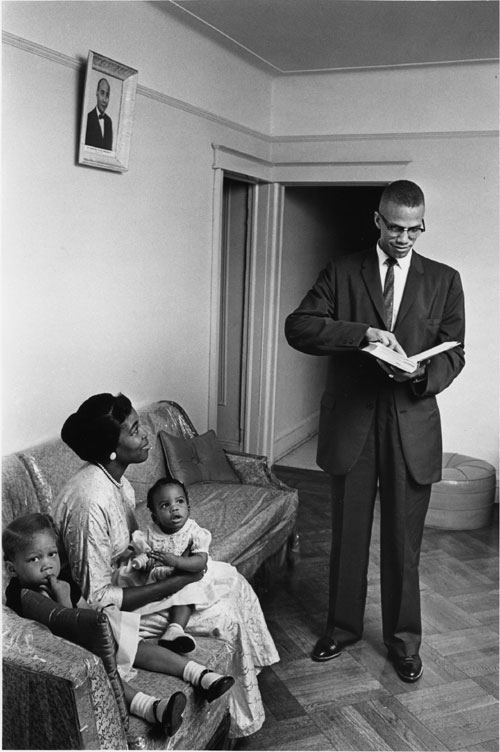
Betty Shabazz

In December 2005, I went to a talk with Cornell West and Zaid Shakir on the legacy of Malcolm X and Martin Luther King. I have to give it up to the two brothers, they rocked the house. Malcom and Martin differed on many issues, but both were gunned down, becoming martyrs for the liberation of Black Americans (and thereby opening up the doors for so many others including women, immigrants, and other minorities). Whenever I think about race relations in the Muslim community, I think to myself, “What would brother Malcolm say about this?” For example, when I watched this Hajj documentary and a Black South African was dissed really hard by his South Asian South African brethren, I wondered: “What if brother Malcolm’s experience on Hajj had been the same? Would he have become an orthodox Muslim? What if those South Asian coloreds dissed Malcolm? Would he have been agnostic?” Afterall, it was his experience on Hajj that opened his heart to accepting European, Arab, South Asian, and South-east AsianMuslims as brothers. For so many of us, Malcolm X has been so influential. I’m glad that folks stopped rockin the X gear, because nothing about El Hajj Malik Shabazz was trendy.

malcolmbatch4b.jpg

We often think about the men in the struggle, but how many of us consider the struggles of the women who stood beside them? When I first converted, I was always down for some liberation struggle. I was young, enthusiastic, and super idealistic. My friends used to call me Betty Shabazz. The tender scenes played out between Denzel Washington and Angela Bassett really moved me. If I imagined having a man as principled, dedicated, intelligent, and driven, then Betty Shabazz was the type of woman I wanted to be to support a Malcolm. Unfortunately, not too many brothers were on point like Malcolm. While I have so much respect for Malcolm X and Betty Shabazz, there is something really tragic about the Shabazz family.

I wonder how many of us know anything about her life? How many think about her struggles and the struggles of the Shabazz family. Here was the wife of one of Black America’s great heroes, the mother of his six daughters, Attallah, Qubilah, Ilyasah, Gamilah, and twins Malikah and Malaak. She went on to earn her PhD in education, was an educator and public speaker. She raised all six of those girls trying to instill in them Islamic values.

But I remember the downfall of Betty Shabazz. It was tied to revenge. I was devastated to hear her name smeared. There were accusations that she and her daughter, Qubilah, tried to hire a hitman to kill Louis Farakhan. Then there was the reconciliation between Farakhan and Betty Shabazz. Although Qubilah was never imprisoned she was ordered to undergoe drug treatment and counseling. Qubilah’s 12 year old son, Malcolm, went to live with Betty. On June 1, 1997 Malcolm lit a fire in her apartment. She died three weeks later on June 23, 1997. It is sad that her own grandson, Malcolm’s eponym was ultimately responsible.

Betty Shabazz is still my hero and a powerful example of what Black Muslim women should strive for: dignity, courage, and dedication. Her life and death reflects the struggle of so many Black women who have held it down to keep their families together and support the community.

Too Much Information

So, I was cruising through the worlds of the digital ummah and became drawn into this whole takfir (declaring someone an apostate) debate. It didn’t take too long before I came across this forum posting about Sheikh Nuh Keller’s intervention in a debate between Deobandis and Barelwis(Here’s a site with his info ). You can also check out the forum where I found this here.

On the Shadhili website, someone asked the questions:

“Is someone who has an idea that is kufr or “unbelief” thereby an “unbeliever”?”

You can find Sheikh Keller’s answer here.

I don’t have a problem with the answer per say. I just think that us poor Muslims are overloaded with information. I am not going to question the intellectual abilities of the commentators on the forum, but this subject matter should really be left to scholars of Kalam. I am all for the freedom of information. I struggle with the elitism in Western academia. I also have strong critiques of the way knowledge became specialized in some Muslim societies and often monopolized by certain lineages. In this way, knowledge became used for power. But at the same time, I would have to agree with Ibn Rushd, some matters should be left up to the learned. I wonder how many engineers and rocket scientists would appreciate my input on their projects. Would a geneticist appreciate my input about gene sequencing, based upon what I could remember from my sophmore bio-chemistry? While I can appreciate science and love reading about discoveries, theories, and scientific methods, I just don’t have enough training to begin testing new compounds on my neighbors, let alone their cats.

So, back to my point. The internet has opened up so much discourse. And as I read the text on a late Saturday night (a total testament to my lack of a social life), I found my head feeling like it was about to explode. There was a serious debate that seemed to be underlying the question about takfir. But that debate also seemed narrow in scope, because there was a large emphasis on the debate between the Deobandis and their adversaries, the Barelwis (For those of you who don’t know who the Deobandis and Barelwis are, it doesn’t really matter. Following all the groups gets confusing anyways). The focus on their debate was unfortunate because of the wider implications about the debates on deviancy, innovation, and difference that Many Muslim communities face. For example, how do Sunnis deal with reformist minded Muslims (i.e.Progressive Muslims), individuals who have their own unique interpretations, or sects of Islam that are often accused of being non-Muslims (Nation of Islam, Ahmadiyyas, etc.)?

Perhaps that is the reason why I was interested in the takfir question. What do traditional sunni Muslims do when confronted with versions of Islam that are different from theirs? I realize that my head didn’t hurt because the material was difficult. But, my head hurt with the thought that for some Muslims, an obscure ‘aqidah issues could get a whole community ousted from the ummah. And it kind of bothered me that one of the most erudite American Muslim convert scholars, who wrote a response that was nuanced but thoroughly grounded in traditional scholasticism, was rejected so quickly by a lay person. My head also hurt for the poor converts or young Muslims who are re-engaging their faith. I just hope they don’t run into all this madness. It is really disheartening sometimes.

What makes it sad is that I’m a scholar and I love studying religious change and debates. So I should be interested in how this plays out in the modern world. Right? But, I can barely tell some people what I specialize in without someone giving me a lecture about the misguidance of Sufis. Sometimes it seems as if someone half read a quote from Ibn Taymiyya that was posted in some internet forum without understanding the context. Some have argued that ignorance is bliss. But Western Muslims are often more intellectual and aware of their faith than their counterparts in predominantly Muslim areas. We like to read these polemical works between scholars and make generalizations about them. We have so much access to information that it is ridiculous. Ignorance is bliss? Maybe, and let’s leave the quibbling over these issues with the ‘Ulema. Few of us are trained in Usul al-Fiqh, Kalam, Tafsir, or even Hadith sciences. But yet, it is common to find debates going on in some musallah about this hadith is weak and this and that brother is an innovator (bidaa). I’m sort of tired of the bad translations of some text that was printed in Pakistan finding its way into the hands of some crazed Muslim who goes around declaring this group and that group wrongdoers, misguided, or not really Muslim. Knowledge and information is good. But with all the stuff floating around, we have a bunch of insane people feeling really authoritative as they try to impose their views on the rest of the universe. Sigh…

On the Desirability of Brown Babies

I was a bit inspired to write this blog after reading Umar Lee’s blog, On Being a White Muslim in America . I also read a few blogs where the authors stated that black women wanted to have babies by white or Arab men in order to have light skinned and curly headed babies. Sure, I know some ignorant black women who have said similar things. But for the most par, my friends are conscious and wouldn’t spout of some nonenense like that. On the other hand, I have heard a few educated black men say that they want to marry a mixed girl because mixed girls are prettier. I have also heard a few black say that they wanted to marry someone white, Asian, or Latina so they would have pretty babies. As one author stated in the comments, it was often hoodrats who stated that they desired a non-black baby’s daddy in order to have babies with good hair. But more than blackpeople, I have heard these statements from members outside of Black American community. In fact, I hear about the desirability for pretty-brown-mixed-babies from liberal white, Asian, Arab, South Asian, and Pacific Islander women. So, if we are going to analyze and critique the ethnic self-hatred of some African women and Black American women, we must analyze and critique the reasons why some women want to adopt African babies or have bi-racial babies who do not look anything like them.
Is it ethnic self-hatred? Is it admiration for African features? Is it a vision of a racial utopia where we are all shades of brown? Or is it something else. I would argue that some really problematic constructs underly America’s fascination with mixed babies.

Keep in mind, I am not saying that all people involved in interracial relationships hold these views. But there are some tendencies that are problematic. I am not saying that mixed people are not attractive. I think all groups and ethnicities are beautiful in their own light, including multi-racial babies. And being in a multi-cultural environment, I enjoy seeing little blonde babies and little Asian babies, as well as little chocolate drop babies, and the curly headed brown babies running around. However, I just find it problematic when you assume that multi-racial children are more attractive than mono-racial babies. And while this might sound liberal and progressive, especially if you are a White Anglo-Saxon Protestant who is rejecting white supremacy, it is still supporting white supremacy because you imply that an African person is only beautiful if their genese are diluted with European, Asian, or Meditterranean genetics. This is problematic in a European dominated society with European standards of beauty. It has had disastrous effects in the Black American community. And it is the reason why we celebrate Beyonce, as opposed to Kelly. For those of us who are phenotypically Africa, these notions are especially harmful, as they affect our self image. But my focus is not on why African women and women of African descent (Black American, Black Latina, and Carribbean) and their responses to European standards of beauty in a global order that is dominated by Europe and the West. I am talking about women, and perhaps some men, who are not members of the African Diaspora who want to have ethnic babies–especially black babies. I see it as part of fetishization and there is something about fetishizing black-ness that is deeply disturbing. Then on top of the fetishization, the celebration of those who are not-quite-black or nearly-white over their darker skinned counterparts.

I live in California, the Bay Area that is. There is a lot more racial mixing and there really isn’t a middle class black community anywhere in sight of Northern California. So my experiences reflect the product of my environment. In California mixed families and bi-racial people are common. More often than not,it is the mother who is non-black and a black father. Few of my black friends were single mothers, but many of my non-black friends eventually did have mixed babies out of wed lock and at young ages. I often see white, Asian, Latina, etc. women (and teenage mothers) pushing a stroller with either a clearly bi-racial child or an ambiguous child. I have pretty good ambiguously black radar because so many people in my family are light skinned, multi-racial, and racially ambiguous. Sometimes it is the subtleties that you notice, but I digress. I grew up in a terribly racist elementary school. I was subject to a lot of racial discrimination because I was the only black girl in my school. But now when I look back, there were a few mixed children in my class who just passed. They were not subject to the daily enslaught of racist jokes and cruelties such as “let’s play segregation today.” On the other hand, my brother’s experiences in Santa Clara were different because many of the white and Mexican American girls pursued him. Black men were cool, they were the athletes, the dancers, the popular kids. But for black girls in integrated environments, it tends to be a lot harder. We are often overlooked by our black male counterparts and the non-black men will not take a second look at us.

Now that black is in, a lot of women who are not black want little curly headed brown babies. Someone noted that in Belgium and Amsterdam, there are European women who get pregnant by African men and raise their children on their own. I don’t know much about this phenomena, but I thought it was interesting. But this leads me to reflect on the kind of ideologies that non-black mothers tell their children. Some of the ideas the ideas are really messed up. Some believe in the racial essentialisms. For instance, one bi-racial man told me that because he was black and white he reflected the merging of two distant strands of humanity. This made him more powerful than either because he was a bridge between the two races. Of course, this is bullshit. In fact, there is more of a genetic range in East Africa than anywhere in the world. In fact, European and Asian lines are really a small recent branch off of a long and ancient family tree. Some bi-racial families like to tell their children that they are extra special (as if Black Americans are ethnically or racially pure) and that they bi-racial people saviors to the world. Some claim that racial mixing is the solution to the world’s problems. But they often fail to look at the case of Brazil to see that social stratification and racism exts there, despite official policies that encouraged racial mixing. All one has to look at how white the government looks like to this date. Some of the racial essentialisms serve to create dangerous color hierarchy that only serves to reaffirm white supremacy. They try to teach their children that the world is color-blind, but many fail to teach their children the complexities of their heritage (especially the Black heritage that has been silent in historical record). The desirability of having brown babies often has little to do with affirming this rich heritage or linking up with the struggle of people of African descent.

At times, it has to do with the ways individuals would like to construct themselves and the fantasies that they have about the black “other.” It can be a way of rejecting white privilege. A white woman with a brown baby is not accepted into white elite circles. Nor are Asian women accepted in their communities and Latina women are often ostracized by their friends, families, and associates. Many are disowned for dating or marrying outside their race (On the other hand it is rare for black families to disown their sons or daughters. And they often raise multi-racial children and treat them well). Having brown babies can serve as a way of advancing an agenda or affirming a new constructed ethnic identity. They can participate in black culture because they now have a rightful place as mother of a black child. However, many women who only date black men and have brown babies would not change their own ethnicity. They do not want to be black women at all. They comletely enjoy their privileged place as desired/objectified other in a community that is so rife with self hatred. In fact, many non-black women feel superior, while at the same time, they often resent black women. I have heard several non-black women talk completely disparaging of black women, our looks, our hair, our body shape, our attitudes, and intelligence. (I am sure that many are regretful that they disclosed to me their off the cuff thoughts. But they have been extremely insightful). This is especially the case when they are competing for the attentions of a black man, or trying to bolster themselves up when comparing themselves to their partners’ exes. I have always wondered why some of my friends and associates felt that confortable saying such statements to me. Perhaps they were looking for me to validate their views. And I take responsbility for not challenging them on their wack statements. It seems as if many non-black women who are into urban/hip hop/black culture hope to raise new brown/black women who will accept their authenticity and be color blind. Having brown babies seems to be a complex social phenomena that I think we have only begun to unpack. We should look at what’s going on to understand how colorism is being reproduced in our community and how the ultimately can have devastating effects on those who are phenotypically Black.

Hip Hop and Culture Vultures

First, let us define culture vulture. This is the definition that I found in the Urban Dictionary:

1. culture vulture
4 up, 3 down
Someone who steals traits, language and/or fashion from another ethnic or social group in order to create their own identity.

Todd just bought himself a Fubu track suit and changed his name to Tyrone. He is such a culture vulture!

by shaniqua2 sacramento Dec 27, 2006 email it
2. Culture Vulture
12 up, 15 down
A scavenger, circling the media, looking for scraps of originality to add to their conceit. They sport eclectic styles and tastes, always recognisable as having been borrowed without adaption or refinement from elsewhere.

David Bowie is probably the best example of a successful culture vulture.

That website was put together by a Culture Vulture

For those of us into Animal Planet or any Wild Animal Kingdom show, we have seen images of these scavengers.They are often the harbingers of bad things about to happen: a sick, weak, or dying animal. They move in once the animal is dead and don’t mind taking their fill of something that is dead and decaying. Fortunately, the many cultures of the African Diaspora are always re-inventing and re-creating, so that the vultures always have fresh meat to feed off of.

My home girl just brought up this issue up in her blog. Her blog really hits home for me, because I feel as if I just “be.” But I was also a B-girl, a back packer, a houser, and breaker. Ultimately, I don’t have to prove credentials to show how my culture influenced the way I lived my life. Having a young mom, I grew up with music all around me. I was a child born in the mid 70s, and my household was alive with disco, R&B, Funkadelic, Soul, and Hip Hop. James Brown was always playing, as well as George Clinton, Bootsy Collins, Earth Wind and Fire, and Marvin Gaye and so many other. My Uncle Booker-T had mad skills spitting game. Rhyming was a way they spit game. And growing up, we knew smooth talking hustlers and artists. I knew rapping from the brothas spitting game, melodic and rythmic. My dad also was a musician and he played the drums and kill some Congos. My mom and aunts used to throw basement parties (you know the kind with the red or blue light). My mom, aunts, uncles, and their friends would wake me and my cousin up to demonstrate our skills. They’d hoot and holla as we worked it out. Yeah, me and my cousin Corey partying with the grown folks. Many of the songs that are remixed today, I grew up with and they are the soundtrack of my life.

But hip hop had a special appeal. As a little kid, I followed my older brother’s footsteps trying to do everything he did. And I remember him sifting through records trying to find the hottest tracks. We shared rooms, and I remember him getting mad at me when I made a mix tape that included scratches. He had the biggest boom box and the freshest gear. Whatever kicks he rocked, I wanted some too. His boys had a brea dancing crew and they used to perform at Great America. In the mea time, I had a crew of other neighborhood rug rats and we’d pull out our cardboard too. My signature finale move was the suicide. Now that I think about it, I was probably really wack. In the early 80s, my brother used to import records from the East Coast. I can even remember getting the latest Roxanne diss album (why was there so many Roxannes), to BDP, Run DMC, and Rakim. I saw the evolution of hip hop to rap, bass music, and knew all the West Coast flavors. Sometimes when we’d travel to New Jersey we’d visit friends and family from New York.

In the early 90s, I was back at it when breaking made its come back. I remember growing up in Cali and my Filipino classmate saying that Filipinos break better than black people. And of course, I was floored. I could never understand how they could beat out in their Honda Civics, but never bob their head. Me, we wer always bobbin, good music always moves me. Another time, I went to a hip hop show and the artists noted I was the only black girl in the crowd. It was eerie… There weren’t any dance crews in the area that seemed black girl friendly. So, it would be me in the garage with my neighbor Levar on some cardboard. But it was kind of hard to pop and lock while everyone stared at my breasts (even though I wore the baggiest clothes and turtle necks).

For years, I lived hip hop. I was that hip hop Muslim girl in the South Bay. I wore my Adidas with dresses and full hijab. From working on college radio, freestyling, writing, even demonstrating to the music production class the old school 808 and 626 beat machines. It was hot with the boom-clap-boom boom boom-clap. But eventually I felt let down by the whole scene and the way it was co-opted. Years later I still feel hip hop and those hold school joints still move me.
As I write, I hear the women of hip hop play in my head (Miss Melody, One of the many Roxannes, McLyte, JJFad,…) Every once in a while I’ll dance. And I have been known to break fools off. But I forego floor manuevers and acrobatics because I’m way too old and am likely to hurt myself.

The discussion of hip hop reminds me of this MTV True Life documentary that had the nerve to air during Black History Month. Half the documentary was about a Latina sorority breaking into the Black stepping world. Even though the young woman’s attitude was emblematic of the ways non-blacks feel about any of our cultural productions, I’m not going to talk about stepping. I’m going to talk about one for of Black music, dance, language, and style–that cultural complex that we know was hip hop. I want to begin my analysis of culture vultures and critique this pattern of mimicking the cultural expression of subaltern groups. I think that they are particularly detrimental because they co-opt of the arts and culture of a dispossessed people. There are people who wish to control the discourse on black music and culture rendering it something that is no longer Black culture, but more of an urban style or something that they can consume.

I have a serious problem with those who wish to divorce the black cultural production of black from its social/political/cutural/economic context. In the name of a trend, they then adopt it as their own. And often they profess to be better at producing given culture better than the members of the original community that created it. Sometimes they even create their own sub-culture, while maintaining their privilege as members of the dominant culture. The culture that they have adopted is more like an accessory, a way of enhancing their individuality because they see their own culture as homogenous and bland.

I’m not really mad at culture vultures. You see, the co-optation of Black culture for various reasons is not anything new. But rather, it is a pattern that is repeated where ever people of the African Diaspora exist: South America, North Africa, the Carribbean, Central America, and even parts of the African continent that is dominated by Europeans or those of Mediterranean descent.

Here is one example of the problems with such forms:
Black South Americans started Tango, which began with the Buenos Aires, Argentina and Uraguay. Oh yeah, you didn’t know there were black people in Argentina.To me that is the biggest historical mystery: what happened to the tens of thousands of Africans? Well, predominately European dominant group co-opted Tango from the black Argentinians before they tried to eliminate the black population and make Argentina the little Europe of South America (by importing Spanish Basques, Italians, and Germans to the country).

My list of other musical and dance forms that began with African slaves or exlaves that have been co-opted by the dominant groups of a given society:
Samba
Merengue
Rumba
Salsa
Swing
Capoeira

As in Latin America, these cultural forms become national cultures and part of the national pride. The suffering of the people who invented these cultural forms, and the creative ways that they came up with to assert their humanity, find relief, build community, and celebrate life becomes lost. Instead, those who co-opt these expressions often misunderstand the experiences of the people they are imitating.
In a discussion about Jazz, an astute author wrote:

The “white Negroes” of the 1920s projected their own desires onto black Americans, most frequently through music.

In much the same way, individuals who co-opt hip hop project their own desires, insecurities, constructions onto black Americans. There is a strange relationship of power: one of admiration and envy. In their mind, they struggle for authenticity and seek for others to validate their experience of the black sub-culture. Most black people, including myself, are happy that people enjoy our cultural forms. But there are many people of AFrican descent who want to feel as if they have their own culture without it being co-opted and commodified.

So now that I have spent an inordinate amount of time reflecting on how these musical forms were so much part of my life and the way I was raised. I want to providea brief timeline of non-black folks imitating and co-oting Black cultural exprssion in North America:

Early 19th century-mid 20th century
Minstrel Shows
Black Face Minstrelsy

1920s-30s
Jazz
Jazz in Black and White


1950s and 1960s
The Blues

White Blues Artists

1950s-
Rock n roll

Rock n Roll Timeline

And now Hip hop….

The history of Hip Hop
Davy D’s Short History of Hip Hop

I still have more reflecting to do on this topic. This is by no means comprehensive. And I’m sure that there are many people who will be pissed off by my analysis. I suggest you study some cultural theory, the history of black cultural expression, black history, and then get back at me. Make sure your intellectual game is tight though…