Waqf

After reading a post on Why Don’t Our Mosques Pay for Themselves,  I posted this on my tumblr account:

I found this article by Muhammad Ashour cross posted on Steven Zhou’s blog. Hat tip to Steven Zhou for his thoughtful analysis on issues pertaining to Canadian Muslims and the Middle East.  Ashour’s article  is definitely a timely read and something that supports what I’ve been saying about the new mosque leadership.  Ashour brings up important issues of transparency when it comes to how funding is applied in various masajid and the need for social ventures in order to fund masjid operations. We had a such thing in history, the religious endowment or waqf. Unfortunately, Muslims are largely detached from their own history because either they think they are too forward thinking to look at pre-modern institutions or they deny the relevancy of any social institution or Muslim practice that can not be directly found in the Qur’an and Sunnah. But the religious endowment is an absolutely important institution that helped provide social services and humanitarian aid, supported students, and kept many masajid afloat. The only problem is that these days, Muslims want to see immediate returns on their investment rather than raising enough funds to start an endowment and then building. We keep fundraising for a new parking lot, or an addition, or to pay for a full time imam. Investing in an endowment results in sadaqah jariyah, but I’ll leave the fiqh issues to the scholars. Anyways, let’s start thinking long term folks!

My knowledge about the Waqf came from my Ottoman studies in undergraduate and graduate school. In a lecture I gave at Philadelphia mosque a few years ago I told the audience  The pious endowments, or Waqf, played an important role in Ottoman economic and social life.  Considered one of the highest of good deeds a Muslim could perform, it consisted of helping other people. Often the waqfs supports hospitals, bridges, baths, inns, hospitals, and markets. The wealthier the individual, the grander the waqf. Many of the audience members were elders, so they had gone through the transition from Nation of Islam to Orthodox Islam in 1975. They recalled that the mosque owned property and back then there were several thriving businesses. But much of this was dismantled during the later years of W.D. Muhammad. One audience member mentioned that there was still community property, they just had to figure out what to do next. I know there are many communities that look to buy property and develop it, and I have heard positive things about another Philadelphia community called Masjidullah. Unfortunately the website is down and I haven’t made it out that way. But they seem to have a lot of programming and I have been told they have a greater amount of transparency when it comes to their allocation of funds. Similarly, I have heard of other communities with development projects in the works, one lead by Imam Okasha in Southwest Philadelphia and another Masjid al Madinah in Supper Darby.  I don’t know if these communities have a long term vision of creating endowments or whether or not they have their vision grounded in the Islamic tradition of waqf. But it would be interesting to explore that in a series of interviews. I guess I have another possible research topic at hand.

But going back to my original quote on tumblr. Unfortunately, I was mistaken about the origins of the waqf. A waqf is an established practice of the Prophet Muhammad (s.a.w.). I did a brief search on information involving the waqf (pl. awqaf). I found this informative page, from a Malaysian organization, Khalifah Insitute’s  website. In the article, it details the establishment of the first Islamic religious endowment:

In the history of Islam, the first religious waqf is the mosque of Quba’ in Madinah, a city 400 kilometer north of Makkah, which was built upon the arrival of the Prophet Muhammad in 622. It stands now on the same lot with a new and enlarged structure. Six months later, Quba’ was followed by the mosque of the Prophet in the center of Madinah. Mosques and real estates confined for providing revenues to spend on mosques’ mainten­ance and running expenses are in the category of religious waqf.

Philanthropic waqf is the second kind of waqf. It aims at supporting the poor segment of the society and all  activities which are of interest to people at large such as libraries, scientific research, education, health services,  care of animals and environment, lending to small businessmen, parks, roads, bridges, dams, etc. Philan­thropic waqf began by the Prophet Muhammad too. A man calledMukhairiq made his will that his seven orchards in Madinah be given after his death to Muhammad. In year four of the hijrah calendar (a lunar calendar which begins with the migration of the prophet Muhammad from Makkah to Madinah in 622), the man died and the Prophet took hold of the orchards and made them a charitable waqf for the benefit of the poor and needy.  This practice was followed by the companion of the prophet and his second successor Umar, who asked the prophet what to do with a palm orchard he got in the northern Arabian peninsula city of khaibar and the Prophet said “If you like, you may hold the property as waqf and give its fruits as charity.” many other charitable waqf were made by the Prophet’s death in 632.

Now, back the situation of our ailing communities. Why can’t our mosques pay for themselves? That is because we are not following the established sunnah of how to fund our most central social institution. And down the list, with our short sightedness, we fail to fund endeavors that would have a long term positive social impact. I found this section especially insightful:

With regards to use of waqf revenues the most frequent purpose is spending on mosques. This usually includes salaries of imam [prayer leader and speaker of friday religious ceremony], teacher(s) of Islamic studies, preacher(s). With the help of this independent source of financing  religious leaders and teachers have always been able to take social and political positions independent of that of the ruling class. for example, upon the occupation of Algeria by french troops  in 1831, the colonial authority took control of the awqaf property in order to suppress religious leaders who fought against occupation (Ajfan, p.325).

Although religious education is usually covered by waqf on mosques, education in general has been the second largest user of waqf revenues. Since the beginning of Islam, in the early seventh century, education has been financed by waqf and voluntary contributions. Even government  financing of education used to take the form of constructing a school and assigning certain property  as waqf of the school. Awqaf of the Ayubites (1171-1249) and the Mamalik (1249-1517) in Palestine  and Egypt are good examples. According to historical sources, Jerusalem had 64 schools at the  beginning of the twentieth century all of them are waqf and supported by awqaf properties in     pales­tine, Turkey and Syria. Of these schools 40 were made awqaf by Ayubites and Mamalik rulers  and governors (Al cAsali, pp. 95-111). The University of al Azhar is another example. It was  founded in Cairo in 972 and was financed by its waqf revenues until the government of Muhammad  Ali in Egypt took control over the awqaf in 1812 (Ramadan, p. 135).

Waqf financing of education usually covers libraries, books, salaries of teachers and other staff  and stipends to students. Financing was not restricted to religious studies especially at the stage of  the rise of Islam. In addition to freedom of education this approach of financing helped creating a learned class not derived from the rich and ruling classes. At times, majority of Muslim scholars  used to be coming from poor and slave segments of the society and very often they strongly opposed the policies of the rulers (al Syed, pp. 237-258).

The third big beneficiary of waqf is the category of the poor, needy, orphans, persons in  prisons, etc. Other users of waqf revenues include health services which cover construction of  Hospitals and spending on physicians, apprentices and patients. One of the examples of the health  waqf is the Shishli Children Hospital in Istanbul which was founded in 1898 (al Syed, p. 287).

There is also waqf on animals whose example is the waqf on cats and the waqf on unwanted riding animals both in Damascus (al Sibaci). There are awqaf for helping people go to Makkah for pilgrimage and for helping girls getting married, and for many other philanthropic purposes.

  Thinking about these passages, I am reminded of how some our brothers and sisters are mistaken in their view of the past. Not long ago, I had a conversation with a sister who said, “Why study history? It is boring? It is dead. It is passed. It is the past.” But the forgotten model of endowment/waqf is why we should examine our history closely. We might see the more Islam in practice in models that worked, as opposed to being reactionary. We can be a constructive community, moving forward and addressing real social and spiritual needs. Let’s just think about the potential if we pool our money together to build endowments and hire trained people to manage them. Instead of each year our communities begging for what they need,  the continual fundraising can help us thrive and flower. 

Muslim Habitus

Over the past years, I realized that much of the spiritual problems I faced were largely due to my inability to bridge the disconnect between my intellectual knowledge and application of important principals.  The knowledge I gained was not transformative, so where was the misunderstanding?  Ali ibn Abi Talib said:

O you who carry knowledge around with you; are you only carrying it around with you ? For surely knowledge belongs to who ever knows and then acts accordingly, so that his action corresponds to his knowledge. There will be a people who will carry knowledge around with them, but it will not pass beyond their shoulders. Their inner most thoughts will contradict what they display in public, and their actions will contradict what they know.

Knowledge has not entered your heart until your legs, arms, and entire body act accordingly. There is a difference between knowledge and Muslim habits. The Prophet Muhammad (s.a.w.) said: “I was only sent to perfect good character” [Muwatta’ and Musnad of Ahmad]. The primary purpose of knowledge in Islam is so that it can influence the individual to the correct course of action. And the correct course of actions should be guided by an intention to do that which is pleasing to God. This contrasts with doing that which is pleasing to oneself or others and guided by one’s own inclinations.

How does knowledge of the traditions of Muhammad become part of the character of the average Muslim? It is through understanding, or as we educators tend to emphasize, application and practice of that knowledge. One of the most powerful ways of understanding this came to me while I was in graduate school and looking at Pierre Bourdieu’s theory of “habitus.” The simplest and most digestible definition of Habitus can be found on wikipedia:

Habitus is the set of socially learnt dispositions, skills and ways of acting, that are often taken for granted, and which are acquired through the activities and experiences of everyday life.

Habitus is a complex concept, but in its simplest usage could be understood as a structure of the mind characterized by a set of acquired schemata, sensibilities, dispositions and taste.

We are all creatures of habit (good and bad), but how do we develop them? How do we develop our tastes, dispositions, and inclinations?  These are important questions that we need to ask ourselves, especially if we are concerned with personal and moral development. Many of our habits are learned, while other arise out of our own inner inclinations. We can learn through mimicking others or through experience. At the same time, we can supress our inclinations and habits in order to yield different results.

But breaking bad habits or developing healthy habits can be a difficult thing, especially when we come to accept certain behaviors as part of our personality. For those of us who are self-reflective and want to change for the better, we have to make some conscious efforts to change many things that are often not really thought about.

The way we think shapes our actions, but our knowledge does not really penetrate our hearts until we set about a course of actions to embody those principles. I believe this is the problem with the over intellectualization of Islam. It is also the problem with the tendency of many Muslims to focus on political or social identity issues. There is a lack of embodiment of some important concepts. So, the way we should think about things is not changing our actions. At the same time, the ways we are doing things are not changing the ways our mind works. Somehow, our thoughts and actions become hollow. That embodiment only happens through rigor and training, which can take spiritual, mental, and physical components.  While we accept anyone who declares shahadah as Muslim, we recognize that there are different gradations of faith. In Surah 49 The Private Apartments, verse 14 God says:

The bedouins say, “We have believed.” Say, “You have not [yet] believed; but say [instead], ‘We have submitted,’ for faith has not yet entered your hearts. And if you obey Allah and His Messenger, He will not deprive you from your deeds of anything. Indeed, Allah is Forgiving and Merciful.”

This verse is very profound, because it highlights the key for that spiritual development. Faith is developed through obedience. And even if we are struggling, by taking those steps, we will be rewarded by the Most Forgiving and Merciful. Sometimes the steps can be small, the most prominent example is salat. In actuality the combined time for the salat is about 17 minutes. Even then, I see people struggle with the idea of submission and it becomes apparent in their forms of resistance to the requirements of ritual prayer.  How have you developed Muslim habitus, if you as a man would never come to a job interview in sagging shorts that expose your butt crack, but you will come to the King of all worlds dressed inappropriately? The perfection of the Muslim habitus is worshipping your Lord as if you see Him, but you cannot, knowing that He always sees you. This is Ihsan, or the perfection of faith. And many, myself included, have a lot of work in that area.

Moving away from outer garments in order to wrap up this discussion, I want to talk about a simple way to develop our Muslim habitus. The first friday sermon I heard my husband give shed light habit-practice-application. He brought up Michael Jordan and asked rhetorically what does he think when he was about to make a play. Marc answered that MJ doesn’t think. His body knew exactly what to do from all those hours of practice. This is the true meaning of understanding, a real embodiment of that knowledge in a way that it becomes a part of you. Without thinking, MJ knew exactly what to do at a given moment.  It reminds me of the final moments of a former principal of Philadelphia’s Clara Muhammad School.  She was in a car accident in Egypt and her family reported that while she awaited medical attention she remained in constant remembrance of God. Although she was in pain, her thoughts were on her Lord. In that moment during her final true test, she faced death with courage and grace. And I wondered how I would react. I thought about some words, which I won’t repeat here, that I’ve said when I had a close brush with death or something traumatic. I think back to the times I experienced severe pain. I wondered would my last act be recorded as having yelled vulgar language, crying about why me, or would I remember my Lord instead.  I realized that only through constant practice of remembrance and prayer that I out of habit, I would just do the right thing without thinking about it.

We practice and practice so that during a real moment when we are tested, our habitus goes into auto-pilot and we know just what to do without thinking. So as part of that development, I’m not going to ask God to damn the thing I stubbed my toe on. Instead I’ll say something glorying Him  (in English or Arabic). Whenever I get frustrated with something or someone, I’m going to avoid cursing at it.  I will ask God to help me deal with the situation with dignity and grace.  And importantly, I will learn the appropriate prayers for the appropriate times so that constant remembrance become a habit, therefore my Muslim habitus. By bringing God into center focus throughout the day, I can make steps towards embodying all that I have learned over the years.  This is the cognitive shift that happens with real transformation. My hope is that more of us move from just being members of the I verbally proclaim to submit (I’m just a Muslim)club , to become those who truly believe and  try to ultimately perfect our faith.

References:

Quran Sahih international http://quran.com/49/2-14

http://en.wikipedia.org/wiki/Habitus_(sociology)

The Critical Thinking Muslim

                                                                                                —Image from ModDB 

“Knowing a great deal is not the same as being smart; intelligence is not information alone but also judgment, the manner in which information is collected and used.” – Carl Sagan

The Muslim world possesses a wealth of knowledge, especially in regards devotional literature, theology, and jurisprudence, yet we have not transformed our knowledge into thoughtful and well-executed ways of addressing our most pressing needs. Muslim communities throughout the world face a plethora of problems: poverty, authoritarianism, civil war, neo-colonialism, occupation, sectarianism, sexual exploitation, corruption, social inequality, civil war, natural disasters, etc. Even American Muslims, who are largely shielded from these perils, are challenged. We face a number of issues: cronyism, crime, domestic violence, poverty, ineptly run institutions, sexism, tribalism, infighting, isolationism, Islamophobia, and an inability to address the needs of marginalized members of our community. The American Muslim community is increasingly literate, with unprecedented access to traditional scholarship and information. Islamic institutions of learning are filled to the brim. Although the American Muslim community is predominantly middle class and highly literate, we somehow still seem ill equipped and are stuck in a quagmire (Pew). We are unable to talk to each other, work together, and develop a common vision. That special something is missing and that something is Critical thinking.

As Muslims, the command to “seek knowledge” is almost like a mantra. But how often are we encouraged to think on a higher level, let alone think critically? This is especially important to think about considering how God speaks of comprehension and thinking in the Quran. Tafakkur تفكر is the reflexive form of the root فكر, which means to reflect, meditate cogitate, ponder, muse, speculate. Tafakkur means to reflect, meditate cogitate, ponder muse speculate revolve in one’s mind, think over, contemplate, and consider. It is mentioned in the Quran 17 times. In Surah A-Rum verse 8 Allah says:

Do they not contemplate within themselves? Allah has not created the heavens and the earth and what is between them except in truth and for a specified term. And indeed, many of the people, in [the matter of] the meeting with their Lord, are disbelievers. (Sahih International)

The word for “Intellect” is ‘Aql عقل, meaning sense, sentience, reason, understanding, comprehension, discernment, insight, rationality, mind, intellect, intelligence. The verb form that we will see commonly used in Qur’an is عقل to be endowed with (the faculty of) reason, be reasonable, have intelligence, to be in one’s senses, be conscious, to realize, comprehend, and understand. In the 49 references of the word in the Qur’an, God often speaks of the disbelievers who do not comprehend.
In Surah Baqarah verse 276, Allah says:

And when they meet those who believe, they say, “We have believed”; but when they are alone with one another, they say, “Do you talk to them about what Allah has revealed to you so they can argue with you about it before your Lord?” Then will you not reason? (Sahih international)

Another important Arabic word that corresponds to critical thinking is the word for logic, منطق which means the faculty of speech, manner of speech, eloquence, diction, enunciation, logic. All three terms, are important to consider when we think of critical thinking. And, I will discuss later, we will see how Muslim scholars employed critical thinking in their struggle to determine what God intended for us to do when an issue was not explicitly stated in the Quran or Hadith literature. Critical thinking implies:

  •  that there is a reason or purpose to the thinking, some problem to be solved or question to be answered.
  • analysis, synthesis and evaluation of information (CTILAC)

Without these two, we were seriously hamstrung. While having the faculty for critical thinking, our community has either ignored its tradition of critical thinking or underdeveloped due to reactionary thinking. As a result, we are a bit hamstrung by our own intellectual deficiencies. I say this with all respect, because we have many knowledgeable people, but they are not good problem solvers and their analysis and evaluation of information is lacking.
As a result, we hit a number of roadblocks. Many Muslims see Islam as a monolith and try to impose their rigid and authoritarian models on others. Our leaders are unable to come up with solutions to problems that were never imagined by classical or early modern legal and religious scholars. Individuals with little experience in non-profit development or leadership, build institutions with little understanding of how to meet social needs. And lay members of our community lock horns in heated theological and juristic debates that take away from a sense of fellowship and coherent communities. Our communities are fragmented by endless polemics where labels and plastic words substitute for real engagement with our differences and our commonalities. All of these problems come about because critical thinking in Islamic studies and devotional education is not something that is valued within our community. Despite our undervaluing of it, there is a great need for critically thinking Muslims, from your average lay member of the community, leaders, and scholars.

If we understand our own legacy of critical thinking and continue to develop critical thinking at all levels of devotional and Islamic education, Muslims will be better equipped to deal with our most daunting challenges. Before going into our legacy of critical thinking, it is important to understand how the term is currently used. The term “Critical Thinking” encompasses a wide array of ways of thinking and processing information. Scriven and Paul write, “Critical thinking is the intellectually disciplined process of actively and skillfully conceptualizing, applying, analyzing, synthesizing, and/or evaluating information gathered from, or generated by, observation, experience, reflection, reasoning, or communication, as a guide to belief and action.” In my experience of teaching, from a high school to college level classes, the most important tool I have tried to help my students develop has been critical thinking. One of the best ways of seeing critical thinking in action was to have students write research papers with sound arguments. That is because “in essence, critical thinking is a disciplined manner of thought that a person uses to assess the validity of something (statements, news stories, arguments, research, etc.)” (Adsit). But I often found that most students lacked not only discipline and curiosity, but also an interest in developing their higher order thinking abilities. Instead, they often focused on trying to get the right answer, rather than learning to analyze, synthesize, and evaluate information. When students don’t think well, they don’t write well. Writing is a higher order level of thinking, but anyone can write without thinking, just as someone can speak without thinking on a subject. But eloquent and logical speeches and well written papers reflect disciplined critical thinking. And both can be subject to critique by others who are keen to see logical fallacies, misuse of sources, or failure to include other factors.

Critical thinking is something that develops with practice. It is something we have to train for. Scriven and Paul write that critical thinking is a set of skills that help us “process and generate information and beliefs.” They also a “habit,” or inclination based on intellectual commitment, “of using those skills to guide behavior.” Critical thinking helps an individual recognize the following:

i. patterns and provides a way to use those patterns to solve a problem or answer a question
ii. errors in logic, reasoning, or the thought process
iii. what is irrelevant or extraneous information
iv. preconceptions, bias, values and the way that these affect our thinking. that these preconceptions and values mean that any inferences are within a certain context
v. ambiguity – that there may be more than one solution or more than one way to solve a problem.” (CTILAC)

Critical thinking is not limited to subjects, so religious thinking has also benefited from critical thinking and in fact, our own tradition of scholarship shines due to our classical medieval scholars’ commitment to critical thinking. One very insightful friend of mine reminded me that we go to college and pay for the skills that our classical scholars had developed. While people outside of the academy have natural inclinations towards certain aspects of critical thinking, often those skills are sharpened and refined during the process of learning a discipline. There is a stark difference between the ways someone like Suhaib Webb discusses a topic, drawing on his years of study and a lay member of the community. People recognize disciplines such as astrophysics and medicine, but often experts on subjects involving in the human experience are not as respected. And people will delve into these subjects without the requisite critical skills or mental rigor to truly engage with them. I found this out as I went into graduate school and developed my field of expertise on Islam in Africa and African History. Friends and family members would discuss a subject and if somehow my view did not agree with theirs and I explained my stance, I would experience their resentment. I learned to be quiet for the sake of peace, even if a loved one was speaking on an issue they were largely ignorant about. Our own willful ignorance in our community is especially detrimental to developing critical thinking. This is especially the case in terms of how some groups of Muslims overlook the 1400 year legacy of critical thinking and scholarship that has allowed our tradition to maintain continuity without a central body or leader to guide it.

Before I took my first course on Fiqh (Islamic Jurisprudents) at Zaytuna in the late 90s, I had no idea about the rich legacy of critical thinking in Islam. I learned about the skills qualified jurists needed to draw on the Quran, Sunna (Prophetic traditions), scholarly consensus, and qiyas (analogy) to come up with rulings on new issues. That basic class whet my appetite on the study of Usul al-Fiqh (Sources of Islamic Jurisprudence), which I later studied a bit in graduate school. Usul al-Fiqh is concerned with the source of Islamic law and methodology in which legal rules are deduced. Kamali explains that the process by which scholars use to deduce sources to try to understand Shariah, Holy Law, is ijtihad. (1). The rules of fiqh use various methods of reasoning, including “analogy (qiyas), juristic preference (istihsan), presumption of continuity (istishab), and rules of interpretations and deduction.” In essence, Kamali points out that Usul al-Fiqh provides standard criteria for deriving correct rulings from the sources (2). However this standard of criteria is now overlooked by many who use ijtihad to come up with convenient rules that can lead to one of two extremes: ultra-liberal positions based on Western inclinations and not on Quran and Sunnah or ultra-conservative positions that purport to be derived strictly from Quran and Sunnah but violate the spirit of Islam.

Before delving further into this discussion, I must admit that I feel woefully ill equipped to engage in any Usuli debate on some religious issue. However, I find that many Muslims will become locked into debates that were never solved by our most gifted jurists. Often lay Muslims, with access to translations of the Quran and volumes of hadith, in addition to treatises and polemics, will derive their own rulings on religious matters based on their understanding of a Quranic verse or a hadith. According to Kamali, historically “the need for methodology became apparent when unqualified persons attempt to carry out ijtihad, and the risk of error and confusion in the development of Shari‘ah became a source of anxiety for the ‘ulama” (4). As a champion of inquiry and free thinking, it is difficult for me to openly admit that I understand their anxiety. But the reality is that our community is struggling with a crisis of authority, and that is mainly who has the authoritative voice in interpreting Islamic law.

The independent, thinking Muslim may feel like he/she is engaging in critical thinking when approaching the highest sources. However, a critical piece is missing. Ebrahim Moosa writes “… untrained in the various exegetical and interpretive traditions, lay people are not aware that a complex methodology is applicable to materials dealing with law, even if these are stated in the revelation” (121). Most lay Muslims are not trained in the language or historical context to know whether a verse was a commandment to a specific group of people at a specific time or to all Muslims of all times. Nor do they always know whether a verse was simply a statement of fact at a historical moment. Similarly, Muslims will use a statement of the Prophet (s.a.w.) without any context or understanding if it was a religious injunction and apply it to their lives. While ignoring aspects of that scholastic tradition, they will draw on it to reject a hadith and say it is da’if (weak). Or they might draw on the polemical writings of a classical author to dismiss the ideas of another tradition. Yet, they often draw on these traditions in sloppy ways that result in more confusion. Sadly, this is because many of the polemical books were written, not for lay people, but for other people who have the requisite skills and training in evaluating and analyzing sources and discipline in reason and logic.

This does not mean that a lay member of the community solely rely upon someone else’s critical thinking, rather that we recognize our own limitations in our knowledge and training and leave open some room for ambiguity. Perhaps we shouldn’t be so willing to condemn others if we don’t have the skills to even assess the validity of their stances. This requires humility which many, me included, often lack. Humility is an important part of sincerity, which is an important component of purifying our intentions before going about any endeavor. When I first converted to Islam and read my few dozen books, I felt a lot more sound in my knowledge than I do now. I didn’t know how much I didn’t know or my deficiencies in training. The more I learn, the more I realize how much I don’t know. The less arrogant I feel about my own knowledge and the more in awe I feel of those scholars who wrote without laptops and cut and paste. Even as we have unprecedented levels of literacy in our community, we must fight narrow mindedness and gathering up of information without being able to judge and assess or use that information for the greater good. And through developing our critical thinking, that Islam is more expansive, rather than restrictive and reactionary. Our greater comprehension through this intellectual struggle will be a truly enriching and humbling experience.

[Note: In order to keep this article digestible, I will continue to develop the themes in later posts to explore other aspects of critical thinking in our community. So, please consider this a part 1 of a longer series. ]

References
Adsit, Karen I. “Teaching Critical Thinking Skills”
http://academic.udayton.edu/legaled/ctskills/ctskills01.htm
retrieved August 13, 2011

CTILAC Faculty Critical Thinking & Information Literacy Across the Curriculum http://bellevuecollege.edu/lmc/ilac/critdef.htm11/18/98. Retrieved from Internet August 13, 2011

Foundation for Critical Thinking “Critical Thinking Professional Development for K-12” http://www.criticalthinking.org/professionalDev/k12.cfm
retrieved from the internet August 20, 2011

Kamali, Mohammad Hashim. Principles of Islamic Jurisprudence. Islamic Texts Society, Cambridge, UK, 2003

Moosa, Ebrahim. “The Debts and Burdens of Critical Islam” Progressive Muslims: On Justice, Gender, and Pluralism. One World Publication, 2003

Pew Research. “Muslim Americans: Middle Class and Mostly Mainstream.” May 22, 2007

The Quran: Sahih International Almunatada Alislami; Abul Qasim Publishing House http://quran.com

Scriven, Michael and Paul, Richard. “A Working Definition of critical thinking by Michael Scriven and Richard Paul” http://lonestar.texas.net/~mseifert/crit2.html
Retrieved August 10, 2010

Towards Thinking of the New Imam

IMAM noun, often capitalized \i-ˈmäm, ē-ˈ, -ˈmam\ 1: the prayer leader of a mosque 2: a Muslim leader of the line of Ali held by Shiites to be the divinely appointed, sinless, infallible successors of Muhammad : any of various rulers that claim descent from Muhammad and exercise spiritual and temporal leadership over a Muslim region

This definition provides us with the meaning of imam within three contexts. Within the sunni tradition, imam  means a political successor to Muhammad, a synonym to Caliph. But most of us American Muslims use imam to refer to the Muslim who leads congregational prayers. Any man can lead prayer, but it is often preferred that the person who can recite the Quran correctly. Women can lead other women in prayer, so in this sense any woman can become an imam.   It is also the honorific title we give to someone who leads a community and this is the meaning of imam that I am talking about. I’m primarily concerned with the current state and future of American Muslim leadership. While there may be a rare woman led community, most are run by a Muslim man who has either been hired by a masjid board or self-appointed in a break away community. An imam functions much in the same way as a rabbi or a parish priest, however there are no qualifications set for the training of imams. There are many knowledgeable and skilled imams;there are some who have limited or training. Some communities have imported imams from overseas who may have memorized the Quran and studied Islamic sciences but have very little knowledge of American society. And within the Black American community, a number of imams are charismatic leaders who are able to gather a large following and are effective mobilizers. While each has their merits, both models still fail at serving the needs of the Muslim community. And both tend to alienate large sections of their congregations, particularly women.

Several Muslim thinkers have argued that an imam needs to understand the social context of America. They have argued that some formal school in fields such as sociology would help.  I want to move beyond the intellectual understanding to what’s going on and look at the training that would go not into intellectualizing the American Muslim community, but serving the American Muslim community. So as I think about the future of our community leadership, in an ongoing conversation, I wanted to point out some skills or training that would improve our masjid leadership. The following list are skill sets that an American imam should have:

1. Enough religious training to teach the congregation and  maintain authority as an imam.

An imam does not have to be a member of the ulema, but he should have enough skills to be effective. This means that the imam should be able to properly recite Quran and have a firm foundation in devotional education  to teach his congregation and maintain his authority. This means that he should have spent considerable time dedicated to formal and informal religious study. And this does not entail spending years abroad kicking rocks, but rather some time  gaining ijazat (permissions to teach from qualified scholars) or shahadah (certificates testifying to competency). Or some other religious authorities can ascertain the imam’s mastery of certain subjects such as Usul al-Fiqh (roots of Islamic jurisprudence), Tajweed (Quranic phonetics), etc. Perhaps in the future, we can have an imam certification process and basic tests to ascertain whether an imam can functionally lead others. But, as I said, the imam doesn’t have to be a major scholar. He can defer the most challenging questions to specialists. The imam should also be able to quickly find resources or resourceful people who he can turn to whenever he doesn’t know something.

2. Spiritual Guidance and Counseling/ Marriage Counseling training

A good imam should not only understand religious and spiritual issues, but he should be well equipped to deal with people coming to them to help them solve their personal problems.  But many imams do not understand the emotional or psychological states that affect the religious life of many of their congregants. An imam should be concerned with developing the moral and ethical conduct of his congregation and not just lecturing people or making them feel bad. Muslims need action programs, improvement programs, and if the community is unable to provide it the imam should be able to refer an individual to the proper resources to get the help that he/she needs. Also, imams are often bombarded with marriage and family problems, as marriage is one of our biggest challenges. There are some imams who are excellent at dealing with marriage crises, but most communities fail at addressing marital disputes. In many ways, there needs to be ongoing training in couples counseling to help develop communication skills and increase intimacy and happiness in marital life.

3. Critical Thinking skills

Basically, the imam should have enough formal education so that he not only  reads and writes well, but thinks well too.  He should be able to interpret Islamic texts and practices in ways that are meaningful for the congregation. We suffer from imams who are reactionary or do not have the requisite skills to address the needs of the community. The imam should be able to develop positions based on authoritative texts and clear logic, rather than on emotions or the daleel of shame (i.e. “AstaghfurAllah”).  The imam should also be able to take in various positions and understand the nuance of broader issues that face the community. An  imam should be able to deal with contemporary issues and communicate with the broader population in a way that would be effective.

4. Leadership training

There is more to leadership than being able to captivate an audience. Instead, leadership is a complex set of skills, including but not limited to the list below:

  • Language and ability to inspire
  • Teamwork building
  • Goal Setting and Project management
  • Communication skills (not just speaking but listening)
  • Problem solving and decision making skills
  • Conflict Resolution and Conflict Management
  • Task Delegation
  • Ethics
  • Financial planning
  • Organizational development
  • Group psychology/dynamics
  • Self discipline and awareness of leadership principles

With these four points, we can find possible areas to develop an effective Muslim American leadership. When I was in New Haven in January, I spoke with some brothers and sisters who were interested in developing a Muslim seminary. Right now we have a problem with funding, so a brick and mortar operation may be costly. But there are alternative programs that we can consider that may include summer intensive classes and online and distance study. What we need are people who are experts in their field to contribute to a joint project to develop our leadership with the highest of standards. And we need more institutions of learning that will help raise the overall Islamic literacy of Muslims. So, let us be creative and think of moving towards a new model of Muslim leadership. Our focus should not be on  creating a rock star imams or reproducing drones who have memorized traditional texts, but creating leaders who will guide have the skills to deal with the daily problems we face today and lead us into a productive and blessed future.

Self Inventory- al-Muhasabah

I sat on a conference panel a few months back where we talked about the current state and future of the American Muslim community. As one of the speakers offered commentary focusing on institutions, my mind sparked. There was so much focus on institutions, but yet people weren’t instituting Islam. People were focused on edifices, but there was little edifying Islam in our daily lives. When my time came to speak, I focused on character building. Our communities seem to lack not only ethos, but ethics. There is too much dissension within our leadership, and many of them are not trained in basic leadership skills. Everybody wants to be a leader, but few people want to be good followers.  And people within the community don’t know how to work well with others to support our mutual goals.  This includes within our families, because our interpersonal skills are so lacking that we are destructive. Combined, the instability of our families and constant political fighting, have created an environment where Muslims are not getting the guidance and resources they need to be successful. Many Muslim leaders have good intentions and I have seen some great strides in institutional building,  but at the same time I see recurrent problems that are not adequately addressed.

As Muslims, we are taught to focus on two aspects of our devotional lives: 1. the laundry list approach to developing practices and habits or 2. increasing our intellectual knowledge through both exoteric and esoteric books, lectures, and articles. We assume that using both approaches we can better ourselves. Often, we are puzzled by why things go wrong.  How can we, as outwardly devout people, end up falling so short of our lofty goals? The truth is that we are missing pieces of the puzzle.  There is a strong disconnect between our own spiritual aspirations and  how we move about in the world for many of us. And that is what jams  up so many of us. Imam Ghazali writes:

O disciple, how many nights have you spent rehearsing your learning, reading books, and depriving yourself of sleep? I do not know what the motive was in this–if it was winning the goods of the world, the allure of its vanities, getting its honours, and vainglory to the debit of your associates and peers, woe to you and woe again! But if your objective in it was the revival of the Prophet’s Law (God bless him and give him peace), the cultivation of our character and breaking  the ‘soul that inciteth to evil,’ blessing upon  you and blessing again!”  (14) [1]

Because many of us are not self-aware, but reactionary, we don’t truly cultivate our character or battle our inner demons. Instead, we look to others for our affirmation, hence the cycle of expectations, entitlement, and ego.  Many of us do not reflect at the end of the day, thinking about why something made us angry or sad. Nor do we question why we do things that are hurtful to either ourselves or someone around us. Rarely do we look at our motivations for certain actions, therefore we hardly ever check our intentions. And that is a dangerous thing because actions are but by intention. This is why we need to constantly assess ourselves.

Ramadan is a perfect time for assessing our relationship with our Creator. In order to be truly honest with ourselves, we have to lift certain veils that block us from being able to look in the mirror. Unfortunately, many of us are busy blaming others, remaining trapped in resentment, or feeling entitled, which causes us not to take an unflinching look at ourselves. One of the first steps entails forgiving others, or at least not letting the pain rule us, and taking ownership for how we have wronged ourselves, others, and our Creator. We need to be able to honestly assess our strengths and weaknesses as individuals and develop real strategies  that draw on our strengths for overcoming our personal blockages. And since that is difficult, and many of us don’t have mentors, guides, and sheikhs who really know us, we have to sort of muddle through. Despite our lack of resources, I think that it is possible to draw on an Islamic tradition of al-Muhasabah or self-inventory, modern psychology, and a bit of self-help to begin that process. I will use self-inventory and self-assessment interchangeably.  First let us look at the definition of self-assessment

self-assessment n

1. an evaluation of one’s own abilities and failings

2. (Economics, Accounting & Finance / Banking & Finance) Finance a system to enable taxpayers to assess their own tax liabilities [3]

In an article, Al-Muhasabah on being honest with oneself, the author states:

Self-criticism seems like a fairly straightforward concept. The activity that makes it possible, however-namely, honesty with oneself-is exceedingly hard to come by, for it requires admission of our wrongdoings whenever such actions escape us.  It means acknowledgement within ourselves that we have committed a sin, whether against our own souls or others, be it our Creator or anyone or anything in creation. For most of us, such a confession is an incredibly tough thing to do. [2]

I think this is really helpful, but only focusing on our wrongs can be demoralizing. I have used self-assessments in the classroom and often they focus on finding strengths. In fact, there are many kinds of self assessments and personal inventories. The most common ones we will find are career and personal interest inventories and the second most common are those we find in motivation literature. There are two aspects of self-inventory, taking an assessment of our character flaws and acknowledging our wrongs and mistakes. A few readers might be familiar with the rigorous self inventory process of programs like Alcoholics Anonymous [4]. I do suggest looking at the moral inventory list because it is a useful tool. Only through acknowledgement of our wrongs, can we perform true tauba (repentance) and make changes. But, in many ways our sins are merely symptoms of an illness. And since most of us don’t have a guide, we have to do some serious self diagnosis. This is where we can use tools to do a real self inventory. The most powerful tool a believer has in the path to Ihsan (Perfecting Faith) is self inventory.  It is important to remember a few principles when it comes to self inventory:

1. Honesty- we must be fully honest and not delude ourselves when we are taking self inventory. We cannot make excuses for our actions or try to sugar coat things.

2. Faith- while acknowledging our flaws, we should have faith that our Lord will forgive our sins and shortcomings. .

3. Hope- We have to accept that we are human and these shortcomings are part of our nature, yet we can overcome them with help from God

One of the reasons why a personal inventory is important, even if you have a spiritual guide, is that only the individual has access to his or her own heart, memories, and thoughts. Confession is not part of Islam, as each person is accountable for his or her actions and no one else can expiate sins. In addition, exposing one’s sins can cause greater harm than good. Finally, the self reckoning is a personal journey and it is dangerous for our souls to take pride in the steps we are making towards improvement. Many people put on an act for others, especially if we admire them and want to impress them. Would I want to tell someone I admire that deep inside I am a fickle person, easily flattered and easily hurt by criticism? Imam Ghazali writes, “travel on this path should be by way of self-exertion, severing the ego’s appetite and killings its passions with the sword of discipline, and not by way of  and useless statements” (24) [1]While someone can observe from the outside and see certain character defects and strengths, they are unlikely to know the full contours. The guide can be just that, a guide on our journey. Each individual must exert themselves, with determination, to walk that path.

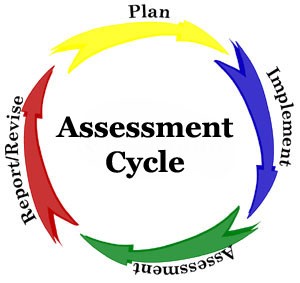
I believe that our development will become apparent to those around us, especially those we love. It will improve the quality of our lives, help us adjust to challenges, and allow us to come closer to our Creator. I do think it is worth it to look for means to honestly assess ourselves, come up with strategies to deal with our weaknesses, implement them, and assess our progress constantly. If we do that in a continual cycle, with honesty, faith, and hope, we can be more successful in both this life and the hereafter.

But don’t just take my word for it, I included a really nice video that deals with this subject below:


Resources:

[1] Al-Ghazali Letter to a Disciple. Islamic TExts Society, Cambridge UK, 2005

[2] http://www.aljumuah.com/straight-talk/40-al-muhasabah-on-being-honest-with-oneself

[3] Dictionary.com

[4] http://www.rc-rc.info/Content/MoralInventoryChecklist3p.pdf


How to Help Somalia

I’m not going to put up the requisite starving children picture on this blog. As a child of the 80s, I remember how the pictures of starving children in East Africa left a largely negative impact on the perception of Ethiopians and Somalis.  Instead, I am just going to write something brief as a reminder of what we can do.

2011 has truly been a traumatic year, not that we forgot Haiti in 2010, but this is a devastating humanitarian crisis. I am especially disturbed by how the extremist group Al-Shabaab is not allowing a number of aid organizations in to help, dismissing claims that there is a famine. Famine or drought, people are dying and people need help. But there are organizations that are getting in there, such as Islamic Relief and the Red Crescent, trying to address some of the immediate needs. The Huffington Post also has a page up outlining some organizations to help Somalia. Many of us understand that much of the aid we give in the developing world only provide bandaid solutions. I pray that our society begins to invest in innovation, encouraging our most brilliant minds to tackle the social, political, economic, and environmental problems that have contributed to this crisis. But right now, we have festering wounds that must be treated immediately. Let us clean up these wounds and apply the bandages so we can save lives. I hope more of us become inspired to be committed long term solutions for the dealing with our greatest challenges. And for those of us whose life’s purpose takes us elsewhere, please don’t forget that we are one family and that we cannot affirm our own humanity if we turn our backs to the suffering of others.

Feeding America and Fidya for Ramadan

“Alms are for the poor and the needy; and those employed to administer (the funds); for those whose hearts have been (recently) reconciled (to truth); for those in bondage and in debt; in the cause of Allah; and for the wayfarer: (thus is it) ordained by Allah, and Allah is full of knowledge and wisdom.” (Al-Qur’an, 9: 60)

Whether they assume that state agencies will take care of America’s poor or the poor in America are not deserving of charity, giving to charitable organizations in America is often not the top of the list in many national Muslim organizations. Many Muslims think that in America, Land of the Plenty, that people are not starving. But according to Feeding America, there are over 50 million Americans who suffer from hunger, that is 1 in 6 adults and 1 in 4 children. Many people often blame those who have found themselves reduced to begging in the street or finding a cot in shelters for their condition. This is the land of opportunity, right? However, natural disasters like Hurricane Katrina and the recent wave of tornadoes, in addition to the tanking economy, have shown that people have been reduced to poverty through forces outside their control. Islamic Relief has some America-based programs, but I have only seen a few mosque sponsored soup kitchens and food pantries.   This is a most unfortunate situation that serves to undermine us as a community and, I believe, our faith. This is especially important when we think about the chapter 107  of the Quran Ma’un (Alms or Small kindness):

Seest thou one who denies the Judgment (to come)?

Then such is the (man) who repulses the orphan (with harshness),

And encourages not the feeding of the indigent.

So woe to the worshippers

Who are neglectful of their prayers,

Those who (want but) to be seen (of men),

But refuse (to supply) (even) neighbourly needs.

Suhaib Webb has a powerful tafsir (explanation)  of this chapter in “Explanation of Surah al-Ma’un,” showing how this small chapter is packed with so much meaning. It shows how our actions towards the poor is really a reflection of our state of faith. How can we truly believe in the Day of Recompense, when we face human wretchedness and do nothing to alleviate suffering? We do it all the time, as we are desensitized to it or fear that giving will decrease our wealth. And we hold on to our wallets and pocketbooks, forgetting that the money have is not really our own, but a loan from God. He gives sustainance, and if we have true faith we wouldn’t worry about giving Him back what He is due by offering charity.

Other well meaning Muslims ignore poverty in America because of, what I believe, are  misplaced priorities. Many Muslims say that people overseas are suffering more, so they are more deserving. Yet, the order of giving charity is first to our families, neighbors, and then to needy. What good is our religion, if we are not able to affect those closest to us? And, importantly, what kind of message are we sending our American neighbors about our commitment to being contributing members of our community and good citizens?  How are we handing someone da’wah pamphlets, yet refusing to give them a helping hand? Many Americans see our community as parasitic, enjoying the economic benefits of this society while working to undermine it. And sad to say, the anti-establishment rhetoric of some Muslims in America has served to support those perceptions.  The us-versus-them rhetoric has also led many to turn their backs on suffering Americans. Or the insular ethnic communities with an emphasis to ties back home has also caused many of us to ignore the immediate needs of our neighbors, whether Muslim or non-Muslim. And so, we are seen  by our neighbors building our masajid, but not making any positive impact on society. At best, we become tolerated, but not welcome neighbors, at worst we are seen as an existential threat to America. We have to take ownership of how neglectful we have been in providing a positive example.

Surah Ma’un reminds us  that are neglectful of our prayers because we ignore feeding the poor, the orphans, and being kind to our neighbors in need. This is especially important during Ramadan. While our fast is for God alone, we have an increase in public acts of worship, with mosques filling up to capacity. There are more opportunities for showing off because of the supererogatory taraweh prayers each night. While I am in 100% support of those who spend time in the mosque and believe this is a great opportunity rejuvenate our faith, we have to make sure we are not just doing things for show. And how does this Surah Ma’un show the correlation? By doing kind acts we can avoid falling into the category of hypocrites or those who deny the Day of Recompense.

Further, our charity as Muslims should increase and it should be to alleviate suffering, not just to feed ourselves. While paying for an iftar is a commendable thing, as we get reward for feeding a fasting person, we should not limit our charity to that. We should take care of the orphans, feed the needy, and do kind acts for those around us. In essence, we should have some social impact. The Muslim footprint should especially be felt during Ramadan in this society. There is so much evidence that shows that Ramadan is not just about fasting.

Evidence for this can be seen in what serves as expiation for those who are unable to fast. For those who  are unable to fast, those who have a chronic disease or are elderly, it is important to pay the compensation, fidya, for missed days. The Hidaya Foundation writes on their page:

  • The price of Fidya for each day of missed fasts is either to feed a poor person two meals in a day, or to give whole wheat, which is enough to feed a poor person twice in a day (1/2 Saa per Hanafi school of thought, or 1 Saa per Shaafi and other schools of thought). (1 Sa = 3 Kilograms approx.)
  • The Fidya price for one who has to pay it should be calculated based on the local prices of whole wheat in the place the person resides.
  • The price for Fidya in the USA is $3.50 by the Hanafi school of thought, and $7.00 according to the Shaafi and other schools of thought.

Scholars have disagreed on whether or not fidya applies for someone who either broke a fast for a certain period or missed a day because of menses, pregnancy, nursing, or 40 days after childbirth, but does not fall into the category of the elderly or individual has a chronic disease and therefore can no longer fast. Faraz Rabbani explains in Who can pay my fidya +make up fasts, “In the Hanafi school, there is no fidya for delayed making up of missed fasts. Rather, one simply makes up the missed fasts themselves–and it is recommended to hasten to do so. [ Shurunbulali, Maraqi al-Falah; Ibn Abidin, Radd al-Muhtar.” Other schools take a different opinion, saying  that for those who can one day make up a fast, should still pay the fidya for each day they missed.  Shaykh Hamza Karamali answers in Payment (fidya) for not making up days from last Ramadan:

According to the Shafi`i school, if one does not fast some days during Ramadan, it is obligatory to make up these missed fasts before the next Ramadan arrives, regardless of whether these fasts were missed with a valid excuse (e.g. menstruation, travel, sickness, etc.) or without a valid excuse.  If one does not make them up before the next Ramadan, one is sinful and must pay a “mudd” (a volumetric measure defined below) of food to someone poor (faqeer) or short of money (miskeen) in addition to making up the missed fasts (I`anatu’l-Talibin, 2.242;Tuhfat al-Muhtaj, 3.445-446).


A “mudd” is the amount one can hold in both hands when cupped together. It is estimated in the Reliance as 0.51 liters (Reliance, i1.33). The type of food one gives varies from place to place. One must pay whatever food is considered the main staple in the area where one lives. This could be wheat, barley, rice or something else (al-Minhaj al-Qawim + al-Hawashi al-Madaniyya, 2.194).

Feeding (it`am) a poor person, as Imam Bajuri (Allah have mercy on him) explains in the section on expiating (kaffara) for fast days that one has invalidated, means giving him ownership (tamleek) of the food. It is not sufficient to cook the food and then invite him to one’s house for lunch or dinner (Hashiyat al-Bajuri, 1.319). Rather, the poor person must be given possession of the food (e.g. a bag of wheat) and then he can do what he wants with it (e.g. eat it, sell it, give it away to someone else, give it back to you and ask you to cook it for him, etc.). As such, it would not be sufficient to invite the people to a feast. One would have to give them the actual staple food.

A number of women I talked to, to be on the safe side are giving the fidya for the days that they cannot fast with the intention of one day making up the days.  However one mistake many of us often make is by sponsoring an iftar or inviting a friend over for dinner with the idea that we are fulfilling the fidya. Regardless of the price, it is clear that the qualification for who gets the fidya should be someone who is qualified to be a recipient of zakat. The poor and the needy are people who cannot pay zakat themselves because they don’t have enough money. And I think these technicalities are important to remember as we are nearing the Blessed month of Ramadan. Are we feeding the poor, helping organizations that distribute money to the poor, helping new converts (for that is what it means of “those reconciled [to truth]),” helping those crippled by debt, giving to God’s cause, or taking care of the travelers? For those of us who need expiation for missed fasts or whether we want to simply increase our charity, our kindness should not just be based on geo-politics or ethnic ties.  This Ramadan, we should move our focus away from lavish feasts at iftars and work towards alleviating  suffering and hunger locally and globally.

**Update **

Islamic Relief USA inaugurated a summer food service program to feed working class children in Maryland healthy meals.  You can read more about it here. Good job Islamic Relief! We need more of this.

It’s not personal…

…but sometimes it is. There was a time when I was all about forging those bonds and finding a community of like-minded individuals online. When I was in my darkest times, I found support in a small community of bloggers.  I even became acquainted with my spouse and learned of our mutual interests through our writings.  For someone who has gained so much from my blog, why the trepidation of forging new friendships through it now? Life is a bit overwhelming for me to spend hours in chat or getting to know someone behind a screen name. I don’t sit behind a computer screen in an office job. Nor do I have hours of downtime like I did in Kuwait. But even more so, I have learned from past social missteps and heartaches that arose  out of connecting to strangers through social media.

Over time I retreated into a more personal world even as some people have reached out to me for support or friendship.  I guess I’m writing this because I feel guilty, however I have a greater need for privacy and real flesh and blood friendships. I am still “friends” with countless people who I have no personal contact with.  I often wonder why am I still connected and how to create greater degrees of separation in this monster called social media. I’m still sorting out the blurred lines between my public blogging, social media, and my personal life. We have just begun to understand the consequences and ramifications of social media. In some ways it makes people feel more isolated, even as they doing more and more to share their lives in the public. For the most part, social media does not forge what Malcolm Gladwell calls strong-ties, unless they already existed prior to social media. For example, my sister lives in Southern California and the rest of my immediate family members live in Northern California. I can see instant uploads of major milestones, such as graduations and baby pictures. While I have reconnected with long lost friends, it still isn’t like how it used to be. I rarely talk on the phone with friends from high school or college, we never get together, we don’t even send email or text. For most of us, we’d have a lot of catching up to do and getting to re-know each other before I could share the most intimate details of my life or feel part of their lives.

Occasionally, I will get a request from someone I never met, but they are a friend of a friend on facebook or they follow my blog.  Ignoring a request isn’t a personal thing, but in a way it is.  But not in the sense that I don’t like you or you’re a bad person, or you’re unimportant. I just don’t know you, even though some of  you may think you know me. You only know some of  my thoughts, personal reflections, and tendency towards typos and bad grammar. Maybe you get my humor or maybe you don’t.  Perhaps we have shared interests or similar views, but we don’t have a personal connection. Most of us haven’t had an extended exchange for me to feel much of resonance. I just don’t want you to think I’m giving you the cold shoulder. It’s nothing personal,  but following my blog isn’t enough for me to allow someone access to more details about my life, so that I can be known without a person truly knowing me. We have to have some type of professional, personal, or or academic relationship before I add you my facebook friends or give you my personal contact.

A Virtuous Life

Why is it that every khutbah, every lecture, and every conference plays out more like a pep rally where we are mere spectators and fans, instead of  the players who should be training and practicing for the big game? And we keep wondering why our team is losing. That’s because none of us are in shape, we can’t decode the playbook, worse, we don’t know how to land that shot. Okay, I’ll stop the sports metaphor because I was never good at team sports. The whole point is that our community life is not necessarily helping us truly transform, improving our conduct and living good, wholesome, and happy lives.  What constitutes happiness and a good life is an ancient question and people have come up with different answers. But the most consistent in their views have been philosophers and religious thinkers. Even during the ancient period, both have agreed that living a good life entails living a life of virtue. A virtuous life is not just about the ability to follow a rule book or  perform rhetorical dexterity to find legal loopholes to justify our means to that end. The dominant approach that Muslims have taken towards virtue is the rule book or laundry list approach. However, this approach is often self-defeating, making us focus on the virtue without exploring what’s wrong with us. This is the same approach that Muslims take to the sunnah, where we focus on traditions and practices that appeal to us, hoping to be cured of certain ills. Often, we are treating mere symptoms, rather than curing the disease.  It is time we begin a holistic approach to bettering ourselves, treating both the symptoms and eradicating the diseases that are destroying the quality of our own lives and our community life overall. Moral and personal development  should be the focus of living a virtuous life or good life. Living a good life is based on universal principles that we find in Islam, as well as many other faiths.  There are many tools  to achieve that end, many found in Islam, but also wisdom that we can draw from ancient sages, philosophers, and even insights from our own society. We should not ignore any tool that can help us with personal mastery.

While many Muslims are concerned with righteousness, we seem to be confused about what does that truly mean. And this is why we should begin to think about virtue and ethics to understand the big picture or (كلٌيات). Before we begin throwing around the term virtue and ethics, let’s first look at what do these terms mean:

vir·tue   [vur-choo] –noun
1. moral excellence; goodness; righteousness.
2. conformity of one’s life and conduct to moral and ethical principles; uprightness; rectitude.
3. chastity; virginity: to lose one’s virtue.

eth·ics   [eth-iks] –plural noun
1.( used with a singular or plural verb ) a system of moral principles: the ethics of a culture.
2.the rules of conduct recognized in respect to a particular class of human actions or a particular group, culture, etc.: medical ethics; Christian ethics.
3.moral principles, as of an individual: His ethics forbade betrayal of a confide

As I stated earlier, religious thinkers and philosophers have mulled over virtue and ethics for thousands of years. Socrates dedicated the latter part of his life to the investigation the development of moral character. Plato recounts a dialogue that Socrates had with Meno about the nature of virtue. Meno asks Socrates whether virtue can be taught, whether it is something that someone can practice, or whether it is something that someone is born with. Socrates believed that there was a link between virtue and knowledge. Only, he believed that people aren’t taught things, they simply remember what their soul had forgotten. If this gets confusing, just remember that Socrates believed that the soul was immortal and that people were born over and over again. Therefore, they just had to remember what they knew before. But, let’s ignore this part of his philosophy and focus on his idea that in order for someone to be virtuous, that person has to have sufficient knowledge. Two arguments that back this up are as follows:

  1. All rational desires are focused on what is good; therefore if one knows what is good, he or she not act contrary.
  2. If one has non-rational desires, but knowledge is sufficient to overcome them, so if one is knowledgeable of goodness, he will not act irrationally. [7]

Socrates believes that no rational person would act in a way that was harmful to his/herself. Maybe people are mistaken in their knowledge? I guess Socrates didn’t account for atrocities like the Holocaust or Rwandan genocide. Harming someone else destroys our own humanity. So moving on to the next group of Hellenistic thinkers. The Stoics were sort of the inheritors of Socratic views on rational thought and virtue. They believed that human beings by nature were rational animals, and therefore it was natural to live “the life acording to reason.” Virtue was excellence and according to the divine law of the cosmos.  John Stobaeus the following as stoic goals in life:

  • Zeno: living in agreement
  • Cleanthes: living in agreement with nature
  • Chrysippus: to live according to the experience of the things that happen by nature
  • Diogenes: to be reasonable in the selection and rejection of natural things
  • Archedemus: to live completing all the appropriate acts
  • Antipater: to live invariably selecting natural things and rejecting unnatural things

Stobeaus goes on to define the four main virtues of the stoics:

Prudence: (concerns appropriate acts) knowledge of what one is to do and not to do and what is neither
Temperance: (concerning human impulses) knowledge of what is to be chosen and avoided and what is neither
Justice: (concerning distributions) knowledge of the distribution of proper value to each person
Courage: (concerning standing firm) knowledge of what is terrible and what is not terrible and what is neither. [8]

These are all reasonable enough and can be found in many traditions, but who would like to live like a stoic, unaffected by passions or hardships? I suppose a lot of people, which is the appeal of Zen Buddhism for many people. Without going in uncharted waters (at least for me),  let’s move on to the lineage of philosophy and ethics within Muslim traditions.

Socratic thought profoundly influenced medieval Muslim philosophers, the Muatazilites. But I won’t go into the controversies surrounding their philosophical school, especially in their argument that one can derive God’s laws without revelation. Instead, I bring them up to point out that in using their Greek influenced dialectical methods, scholars like Imam Ghazali were able to safeguard and in many ways revive Islam. The strength of Islamic institutions and thought was in applying universal Islamic principles to local institutions or cultural forms to produce something that was relevant in societies across the globe and over 1400 years. But since Imam Ghazali was so successful in shutting down the philosophers that very few Muslims have ventured back in the territory of exploring virtue through reason, and not just solely from revelation and hadith traditions. The unfortunate consequence is that we are back to the laundry list approach to dealing with virtue in Islam. We are a community concerned with ethics, but without an ethical system.

A few western scholars have approached Azhari scholars over the need to consider ethical systems. Some of the traditional scholars were amenable to this idea, but perhaps we all lack the training in performing the task. That doesn’t mean that we can develop the requisite skills, especially with some effort.  I think this would be a fruitful direction to go in because over the past few years, I have often wondered how is that many religious people can do things that are harmful to themselves and others, but still consider themselves moral and receive no censure by the religious community. In many conversations with friends, peers, and loved ones, the answer came to the lack of  a consistent ethical system. The basic assumption is that if something is allowed in Islam that it is the right thing to do at any given point in time. People often overlook the question of whether something was right in one given circumstance could be wrong in another, and what guiding principles should we draw upon to determine a proper course of action. The salad bar approach to the religion undermines holistic development and moral consistency. Further, many adherents have used Islam to justify their own shortcomings, in effect deluding themselves with self righteousness. This is how we have people hiding behind, beneath, and under the guise of religion.

Recalling Socrates, I do think that even though many Muslims rejected the Greek influence in Muatazilite thought, they still seem to be influenced by his intellectualism.  Tariq Ramadan writes:

Islamic literature is full of injunctions about the centrality of an education based on ethics and proper ends. Individual responsibility, when it comes to communicating, learning and teaching is central to the Islamic message. Muslims are expected to be “witnesses to their message before people”, which means speaking in a decent way, preventing cheating and corruption, and respecting the environment. [9]

Muslims are obsessed with knowledge and knowing. We love books, classes, lectures, debates, pamphlets, websites, forums, podcasts and blogs that make us feel knowledgeable. The assumption is that correct knowledge leads to better practice.  The problem is that true knowledge is not just limited to thought or reason. But knowing how to act sometimes takes practice and constant strength training.

If you want to really know how to play basketball, you can’t just read a bunch of books. You have to get on the court, practice making shots, until your hand-eye coordination has figured out how to make that perfect arch to land the shot. At first, you must be very conscious of each action,  how to dribble, how to pass, rebound,  and with time things come natural. So, while Socrates believed that knowledge was the key to virtue, virtue actually comes from something you practice over and over again until you get it right. Of course, knowledge is essential, but one has to inculcate that knowledge so that we embody it. Action is essential in applying that knowledge. This is why Muslims perform salat, fast, go on hajj and are reminded to constantly perform remembrance. These actions reinforce the declaration of faith. And we do all of those things to achieve one important goal, pleasing our Lord.

You must be aware of the goal you are aiming, so that when you miss the shot you understand what you did wrong. If you have no knowledge of your goal and are unreflective, then you will keep making that same bad shot over and over. I admit, I slipped back into the sports metaphor and, honestly, I was never good at basketball. I’m a sore sport, but I have trained and gotten in shape for different reasons. Over the years, I have some modicum of self-discipline because of my deep commitment to self-development. I believe in setting goals. As Muslims, we should be aware of what our true goal is, and that is to be successful in this life and the hereafter. Outside of Imam Ghazali’s account of his spiritual crisis, I haven’t found too many detailed stories of how individual Muslims conquered their own shortcomings. So, I turn to my own cultural context to see who has developed systems of personal development, especially focusing on moral development.


Benjamin Franklin comes to mind not because I live in Philadelphia and there are statues of him everywhere, but rather because he created a self improvement program long before the self-help craze of the late 20th century.  Franklin’s list of virtues and his efforts to gain mastery over them are an interesting case study. Franklin listed thirteen virtues that he considered to be the most important and they are as follows:

1 . Temperance. Eat not to .  not to Elevation.
2. Silence. Speak not but what may benefit others or yourself.Avoid trifling Conversation.
3. Order. Let all your Things have their Places. Let each Part of your Business have its Time.
4. Resolution. Resolve to perform what you ought.Perform without fail what you resolve.
5. Frugality. Make no Expense but to do good to others or yourself: i.e. Waste nothing.
6. Industry. Lose no Time. Be always employ’d in something useful. Cut off all unnecessary Actions.
7. Sincerity. Use no hurtful Deceit. Think innocently and justly; and, if you speak, speak accordingly.
8. Justice. Wrong none, by doing Injuries or omitting the Benefits that are your Duty.
9. Moderation. Avoid Extremes. Forbear resenting Injuries so much as you think they deserve.
10. Cleanliness. Tolerate no Uncleanness in Body, Clothes or Habitation.
11 . Tranquillity.Be not disturbed at Trifles, or at Accidents common or unavoidable.
12. Chastity. Rarely use Venery but for Health or Offspring; Never to Dullness, Weakness, or the Injury of your own or another’s Peace or Reputation.
13. Humility. Imitate Jesus and Socrates.

The thing that made Franklin so important in this area was his effort at tracking his progress on these virtues, with the aim of mastering each one.  I think it is important to note how self-reflexive he was in this process. This was all about personal accountability. At the end of the day, he’d do an inventory of his actions. If he violated one of the virtues, he checked it off. Initially, he had a lot of check marks. But over time, the check marks became fewer and fewer. Eventually he gave up the keeping a daily log, but he continued the path of self-improvement throughout his life. For some, this may seem a bit OCD. But for others, it may be a useful tool in taking inventory of ourselves. There are even people today who have a similar chart on their iPhones. You can download the chart and some people have incorporated similar charts in self-help programs.

Now this takes us to the self-help industry. According to wikipedia,  “the self-improvement industry, inclusive of books, seminars, audio and video products, and personal coaching, is said to constitute a 2.48-billion dollars-a-year industry [5]. Samuel Smiles coined the term “self-help” in 1882, in his book, Self-Help [4] While there are many controversies surrounding the self-help industry, and many valid critiques including the psycho-babble and placebo effect of some of the more dubious methods such as subliminal programming, there is great merit to self-improvement. People can transform themselves. One of the most powerful self-help programs, is Alcoholics Anonymous.  The thing that I find very telling of their success can be found in the  original Twelve Steps:

    1. We admitted we were powerless over alcohol—that our lives had become unmanageable.
    2. Came to believe that a Power greater than ourselves could restore us to sanity.
    3. Made a decision to turn our will and our lives over to the care of God as we understood Him.
    4. Made a searching and fearless moral inventory of ourselves.
    5. Admitted to God, to ourselves, and to another human being the exact nature of our wrongs.
    6. Were entirely ready to have God remove all these defects of character.
    7. Humbly asked Him to remove our shortcomings.
    8. Made a list of all persons we had harmed, and became willing to make amends to them all.
    9. Made direct amends to such people wherever possible, except when to do so would injure them or others.
    10. Continued to take personal inventory and when we were wrong promptly admitted it.
    11. Sought through prayer and meditation to improve our conscious contact with God as we understood Him, praying only for knowledge of His will for us and the power to carry that out.
    12. Having had a spiritual awakening as the result of these steps, we tried to carry this message to alcoholics, and to practice these principles in all our affairs. [6]

First, the admit that they don’t have control over the urges, they turn to a higher power for help, they take a serious inventory of their own shortcoming, repent and try to make amends to those whom they hurt. Importantly, through the constant process of prayer and correcting wrongs, AA members can have a spiritual awakening. In many ways this is a process of repentance that can be found in Islam: leaving the wrong action, making sincere repentance to our Lord for sinning against ourselves and Him, and asking forgiveness of another person if we harmed him or her. Repentance is a great blessing in Islam, it is an opportunity to experience Allah’s Grace and Mercy. Many people have achieved spiritual awakenings after a fall from grace.

Still a believer is not to be content with cyclical sinning. We are all taught the three stations of faith: submission ( Ihsan إسلام), belief (Iman إمان), and finally perfecting faith (Ihsan إحسان). Only through self-improvement and refining can an individual achieve Ihsan. Ihsan is the highest state of faith, where we live our lives knowing God can see us, even though we cannot see Him. This type of consciousness keeps us on our best behavior. But to have this consciousness at all times, we have to go through spiritual and moral development. In Islam, the method of spiritual development is called Purification of the heart, some calling it Tazkiyyah and others calling it Tasawwuf. Without going into the controversies surrounding Sufi/Salafi polemics, let us just note that the term tazkiyya has Quranic roots meaning to purify. Tasawwuf is a term that came later and is often associated with institutional developments in mystical brotherhoods. Still, the purpose was the same, to purify and improve the moral and spiritual standing of the adherent.

There are a great many virtues listed in the Quran.  As pointed out earlier, many Muslims have created a laundry list of Islamic virtues.  There is no shortage of literature on traits that Muslims should exemplify. And these are are beautiful and useful in improving ourselves.  Muslim scholars are also concerned with what keeps Muslims from improving their station. Scholars, such as ibn Jawziyya and Imam Ghazali, have listed out several impediments to that refining process through tazkiyya or tasawwuf:

  • Neglect or forgetfulness
  • Submitting to one’s own passions (Nafs or Hawa)
  • Shaytan
  • Bad company or evil environment
  • Arrogance or self-delusion
  • Love of the material world
  • Despair

Or they can be found in the four poisons of the heart.

  • Excessive Talking
  • Unrestrained glances
  • Too much food
  • Keeping Bad Company [3]

Sometimes that list of Muslim virtues is so long that an individual can feel very overwhelmed.  Or we may think that avoiding one of the poisons  or overcoming one of the impediments will cure us from a spiritual or emotional ailment. The list approach may blind us from looking at what is really wrong with ourselves. This is why I felt that it may be appropriate to try to consider some patterns that can give us a big picture approach. The Quran tells us:
Indeed, the Muslim men and Muslim women, the believing men and believing women, the obedient men and obedient women, the truthful men and truthful women, the patient men and patient women, the humble men and humble women, the charitable men and charitable women, the fasting men and fasting women, the men who guard their private parts and the women who do so, and the men who remember Allah often and the women who do so – for them Allah has prepared forgiveness and a great reward. [33:35]

This verse from Surah Ahzab is  a good place to start in trying to find key virtues: belief, obedience, truthfulness, patience, humility, charity, abstinence and moderation, chastity, and mindfulness of God. I also began searching in the Quran to find the names of people who God is pleased with and who are successful. The  most common names I found are:

مؤمنون Mu’minun- Those who believe

صابرون Sabirun- Those who are steadfast/patient

صالحون Salihun- Those who are righteous

مخلصون Mukhlisun- Those who are sincere

محصنون muhsinun- Those who are good-doers

متقون Mutaqun- Those who have taqwa (scrupulousness)

خشعون Khashi’un- Those who are humble

Who wouldn’t want to be among those whom the Creator is pleased with? Who wouldn’t want to be forgiven and receive a great reward from our Lord? I believe in the coherence of the Quran and the importance of coherence in our lives. This is why I think that it is important that we look beyond the laundry list approach and focus on the key virtues outlined in the Quran. These virtues can be guiding lights in determining our course of action, leading us to live richer, fuller and happier lives. This is why it is important to explore each of these terms, to consider how they can guide us not just to a moralistic life, but a virtuous life. Some of the explorations may lead to dead ends, but with patience, dialogue, and careful consideration, they may lead to something fruitful. I hope you join me in this journey, as my aim is to explore virtue in Islam in search of an ethical system.

References:
[1] http://www.fordham.edu/halsall/mod/franklin-virtue.html
[2] http://www.islamic.pwp.blueyonder.co.uk/Tazkiyyah/station_of_muraqabah.htm
[3] http://www.islamic.pwp.blueyonder.co.uk/Tazkiyyah/four_poisons_of_the_heart.htm
[4] http://www.fordham.edu/halsall/mod/1882smiles.html
[5] http://en.wikipedia.org/wiki/Self-help
[6] http://en.wikipedia.org/wiki/Twelve-step_program
[7]http://personal.ecu.edu/mccartyr/ancient/athens/Socrates.htm
[8]http://philosophy.ucdavis.edu/mattey/phi143/stoaeth.htm
[9] http://www.guardian.co.uk/commentisfree/belief/2010/feb/23/ethics-citizenship-islam