As promised, some links to where you can help the people of the Democratic Republic of Congo
Doctors Without Borders
Activities in the Congo
International Rescue Committee
Congo Campaign
Oxfam
Donate here

As promised, some links to where you can help the people of the Democratic Republic of Congo
Doctors Without Borders
Activities in the Congo
International Rescue Committee
Congo Campaign
Oxfam
Donate here
While Philadelphia has always been my favorite East Coast city, I sense that this environment has sucked the life and dreams out of its people. When my husband and I went to Harlem a few weeks ago we noticed that the demeanor of New Yorkers was different from the demeanor of Philadelphians. I saw a little more pride in the way women carried themselves and the men groomed themselves. I’m not trying to paint a rosy picture of Harlem. I saw my share of nonsense, including discovering a firearm in an unlikely place. But that’s another story for another day. New York has its grime, but it is not as gloomy in disposition as Philadelphia. Despite what the Chicago School says, no one city is emblematic of the condition of the inner city or state of Black America. But there is one city that embodies the condition of Black American Islam more than any other: Philadelphia.
Philadelphia is full abandoned buildings, where authorities don’t expend the energy or resources to demolish burned out shells. I’ve written about the state of urban decay and it’s demoralizing effects in the past. I’m not trying to tear this city down without imbuing new meaning. It is easier to critique a faulty construction and let it crumble due to misuses with misuse than it is to retrofit a decaying edifice and give it new life and meaning. I’m reflecting on this place because there is so much at stake here. Philadelphia Muslims, including recent transplants such as myself, must seriously take stock of these self-destructive tendencies. Everyday I go to work, I think about how can I work within Muslim institutions and contribute to the edification of our youth. Sometimes moral and spiritual renewal requires refurbishing old buildings, so that a place maintains its historic character. But some places are so damaged or their foundations are so weak that the entire area must be leveled. Sometimes we have to just start over, rather than bolstering something that is much more of a liability for the people it is trying to help.
This is the case for Philadelphia Muslim institutions: there are no Muslim run soup kitchens, not a single shelter for abused women that caters to Muslim women’s needs, and very few social programs, such as conflict resolution or treatment programs, let alone re-entry programs for ex-convicts. There are no services for elderly Muslims, so that they may have halal meals on wheels. Nor do our shiftless young men run errands for the elderly who may not be able to go outside during the hazardous winter storms. Once upon a time, Black American Muslims were seen as a positive benefit to the community. Islam was supposed to be transformative in the lives of people.
However, I am hearing increasing stories of people who have found ways for Islam to justify their proclivities rather than leave a positive impact on this Earth. The Black American Muslim community, just like immigrant Muslim communities, is not immune from the social ills of the broader society. I can save my observations of the colonized mentality within immigrant communities for another day. But today I want to focus on problems that are evident within the Black American Muslim community. In many ways, it is more vulnerable than the other communities. Just as so many Black Americans have grown complacent, so have many of our Black American Muslim youth. This complacency is not out of comfort or self satisfaction, but comes from being broken: “I will never overcome this or that.” It comes from being so damaged and having no sense of self worth. “I don’t deserve better.” It comes from being conditioned into certain patterns of behavior. “Why even try?” But this complacency is wrapped up in self-righteousness. “I’m not focused on the dunyah.” Laziness is dressed up in opposition to non-Muslims. “I don’t want to work for the kuffar.” Lack of drive is costumed in resistance against exploitation and corruption. “I want to earn a halal means.” The reality is that it is the same shiftlessness from the dominant ignorant culture (i.e. modern Jahiliyyah ) dressed in a thobe and topped with a kufi.
This shiftless behavior is most frequently seen in our young Black Muslim men who have distorted notions of manhood and masculinity. There is a corrosive culture of masjid masculinity that combines the patriarchy that can be found within Muslim societies and the misogyny in Black American culture. It finds its justifications for anti-women behavior within Middle Eastern culture. The only problem is that these same brothers often miss the redeeming aspects of Middle Eastern culture, such as honor and notions of manhood tied to providing for their families. Some Black American Muslim men who make their wives work or worse yet, welfare recipients, while they do nothing to support their families. There are even brothers who have their wives work in the US while they study “sacred knowledge” overseas. Some Muslim men will justify their promiscuity within Islam as they constantly chase women and divorce more women than they can count. Similarly, there are women who make concerted efforts at developing relationships with married men and breaking up families. There are women who can’t keep track of their fathers of their children. They hide behind niqab when they get free tuition at the Muslim school, but spend their time posting half naked pictures on myspace looking for the catch of the week. I’ve heard stories of Muslim women jumping other Muslim women in Wal-Mart parking lots. I’ve heard stories of Muslim women following other Muslim women because they have beef.
I’m not just trying to be a sensationalist. My guess is that for every one of these ghetto-Islam stories, there are 10 stories of personal transformation. People make mistakes. Most of us have had our spells of backsliding, but the problem is when institutions do not address problems that are a detriment to community building. To be frank, in many Muslim communities in Philadelphia, there is an undercurrent of gangsterism. That, within itself, has allowed for much of the destructive tendencies in the community to grow and propogate. The destructive nature of the predators and criminals becomes most apparent when you work with children, because they are the most vulnerable. Some of my friends are teachers who work with children with serious psychological and emotional problems that have stunted their ability to socialize and even learn. Unfortunately, we throw a hijab on most of our problems. We point fingers at infidels, deviants, and hypocrites without looking at our own failure to inculcate the true meaning of Islam in transforming our lives. We don’t see the damage that we do to others in the wake of our own self-destructive tendencies.
I’ve only touched on a few issues. But working within a community day in and day out really opens your eyes. We Black American Muslims must have some difficult conversations. We will have to discuss our failures on an individual level and a collective level. We will have to examine how we others and, importantly, how we failed ourselves. This is where humility must be inculcated, because if we are not self reflective and open to accepting blame then we have no hope for making changes. Then we must make some painful choices about our institutions. I am not saying that I have all the answers. None of us do, but we need to start address the problems meticulously. I don’t think swinging a sledgehammer blindly and without a plan will help. Once we address them, we have to have a plan of action. This is not just cleaning up our own backyard; this is cleaning up our streets. We might love our childhood homes, but they may have to be completely leveled so that we can rebuild. The renovation process may mean that the way we used our old edifices must be completely rethought. And anybody that’s been through a renovation knows that is a messy process fraught with all sorts of hazards. Knowing full well that we will make mistakes as we continue this beautiful experiment of Islam in America, we must move forward with hope as we constantly seek guidance from our Lord.

Some places haunt you. They haunt with disturbing tales, tragedies, injustice, and outrage. They leave you with a sinking feeling, doubting humanity. Some places make you wonder how do people have faith and hope, how do they still strive to live dignified lives in the face of a long legacy of atrocities? Although I’ve never been there, ghost tales from the Democratic Republic of the Congo haunt me. I tread lightly on this subject, with full knowledge of the Western tendency to pathologize Africa. The Congo is by no means the portrait that Joseph Conrad paints in the Heart of Darkness. In his critique of Conrad in “An Image of Africa: Racism in Conrad’s ‘Heart of Darkness,'” Chinua Achebe writes, “Heart of Darkness projects the image of Africa as ‘the other world,’ the antithesis of Europe and therefore of civilization, a place where man’s vaunted intelligence and refinement are finally mocked by triumphant beastiality.” It is no surprise that Conrad’s novel is part of the western canon, continually reifying an image of a savage Africa. Of course, our critiques of Conrad’s racism make our analysis of his work more nuanced.
Many people imagine the entire continent as a wild place, where lions and elephants roam. When I travelled to North Africa, I answer questions from some friends and family members about lions and giraffes. I assured them that throughout Africa, there are skyscrapers and busy streets, international ports, airports, universities, and cell phones. But there are conflict zones and failed states where the government’s monopoly on violence is only broadcasted to the perimeters of metropolitan zones. In rural outskirts, such as in Eastern Congo, citizens have little protection from rebels or the military who often become predatory and wreak havoc on the lives of innocent civilians. In places like the Democratic Republic of Congo (DRC), women and children suffer the most because they are the most vulnerable.
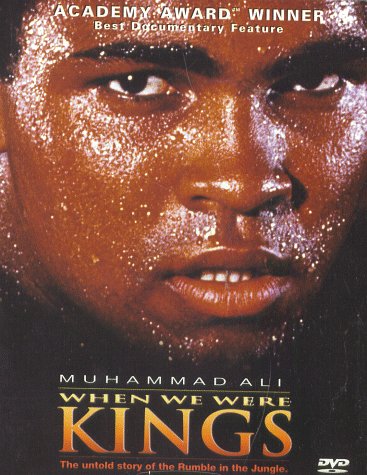
Some of us may know a little bit about the history of the DRC. It was once called Zaire and was ruled by a Mobutu Sese Seko for over 30 years. He was a US backed strong man who established totalitarian rule until his exile and subsequent death in 1997. Boxing aficionados may be familiar with the “Rumble in the Jungle,” the match between Muhammad Ali and George Foreman held in Kinshasa.
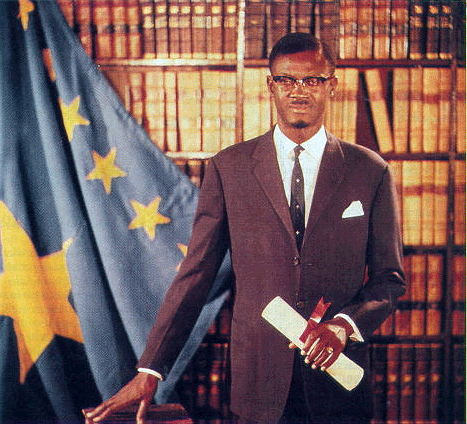
 Others, more familiar with anti-colonial resistance movements and interested in CIA conspiracy theories will likely be familiar with Patrice Lumumba.
Despite our superficial knowledge of the region, the Congo Basin has a long rich history. It has had over 500 years of intense contact with the West and was comprised varieties of African societies from large states to stateless hunter gatherers. The Kingdom of Kongo was a sophisticated, centralized society that comprised of northern Angola, Cabinda, the Republic of the Congo, and the western portion of the Democratic Republic of the Congo. In the late 15th century, Christianity was the state religion. As a major source of slaves for the Portuguese and other major European powers, many of us descendants of Africans in the Americas are, ourselves, ghosts of the Congo.

Although the current conflict in the DRC has some roots in the Rwandan genocide, the instability in the DRC can be tied to the colonial legacy under the Belgians and their instability during decolonization. Adam Hoshchild’s book brings to life Belgium’s King Leopold’s exploitation of the Congo Free state from 1885 to 1908. Some estimates say that Leopold’s policies resulted in a population reduction from 20 million to 10 million. After efforts to free the Congo Free State from King Leopold’ tyranny, the Belgians ineptly ruled the Congo. They did little to help establish a firm foundation as other European colonial powers, such as Great Britain and France sought to train Africans as civil servants in preparation for self rule. Instead, they pulled out all infrastructure as they left, damning the Congolese in their efforts to establish a stable democracy.
The ghosts of the Congo aren’t just dead and buried, people today still are affected by the brutal legacy of colonialism and the outcome of transnational conflicts involving Uganda, Rwanda and The Congo. Our own government can be implicated for our own hands in supporting a brutal regime. For numerous reasons, the DRC should be a top priority on international affairs. As I mentioned, so many foreign hands were in the pot and contributed to the legacy of violence and intimidation. There is clear documentation of atrocities and a clear need for humanitarian aid. Today, in an op-ed piece by the New York Times article titled the Capital of Killing, Nicholas Kristof told the harrowing story of a young woman who had been raped repeatedly by militias who use sexual violence as a tactic in their civil war. Kirstof compares the atrocities in the DRC to the Holocaust writing:
But so far the brutal war here in eastern Congo has not only lasted longer than the Holocaust but also appears to have claimed more lives. A peer- reviewed study put the Congo war’s death toll at 5.4 million as of April 2007 and rising at 45,000 a month. That would leave the total today, after a dozen years, at 6.9 million.
What those numbers don’t capture is the way Congo has become the world capital of rape, torture and mutilation, in ways that sear survivors like Jeanne Mukuninwa, a beautiful, cheerful young woman of 19 who somehow musters the courage to giggle.
The article goes on to tell of Jeanne’s struggle with fistula, a condition when the wall between the vagina and anus are destroyed. Fistula is very common among young women who are either gang raped or give birth before their bodies mature. The violence she experienced and the threat she is constantly under just as much due to the civil war, as the colonial legacy.
Sexual violence is one of the many atrocities that various groups have perpetuated against civilians. Whether or not we have some religious, ethnic, or historical ties, whether or not there are US interests in the region, whether or not we fully understand the complexity of the conflict, we should care about human suffering. There are countless people working to alleviate suffering. Many are trying to raise awareness to the crisis. Kristof highlited the work of one hero, Denis Mukwege. This doctor who worked to repair Jeanne Mukuninwa’s damage, as well as tens of thousands other women who have been literally ripped apart by this conflict. The following video is a thought provoking piece on Denis Mukwege’s work:
We must not turn a blind eye using some racist justification for our apathy. That was the type of apathy that allowed 800,000 people to be murdered in Rwanda. At the same time, we cannot be paternalistic in our efforts to help our brothers and sisters in Africa. It is important to listen to African voices so that we can find ways to alleviate the suffering without exacerbating the conflicts. We have to work with grass roots organizations to effect change. We have to understand the intersections between local, national, and transnational forces that have shaped the instability in Eastern Congo. And first and foremost, we must educate ourselves. In my next post, I will provide links organizations that continue to provide relief and support for the people of the DRC.
To remind us of our misguided attempts to construct an imaginary Africa, I close out with a now controversial poem written by Vachel Lindsay in 1913. Adam Hochschild borrowed a line from it for the title of that award winning book. We should remind ourselves that the racism that was prevalent in the turn of the 20th century often still rears its ugly head in the turn of the 21st century.
THE CONGO
A Study of the Negro Race
I. Their Basic Savagery
Fat black bucks in a wine-barrel room,
Barrel-house kings, with feet unstable,
[A deep rolling bass.]
Sagged and reeled and pounded on the table,
Pounded on the table,
Beat an empty barrel with the handle of a broom,
Hard as they were able,
Boom, boom, BOOM,
With a silk umbrella and the handle of a broom,
Boomlay, boomlay, boomlay, BOOM.
THEN I had religion, THEN I had a vision.
I could not turn from their revel in derision.
[More deliberate. Solemnly chanted.]
THEN I SAW THE CONGO, CREEPING THROUGH THE BLACK,
CUTTING THROUGH THE FOREST WITH A GOLDEN TRACK.
Then along that riverbank
A thousand miles
Tattooed cannibals danced in files;
Then I heard the boom of the blood-lust song
[A rapidly piling climax of speed and racket.]
And a thigh-bone beating on a tin-pan gong.
And “BLOOD” screamed the whistles and the fifes of the warriors,
“BLOOD” screamed the skull-faced, lean witch-doctors,
“Whirl ye the deadly voo-doo rattle,
Harry the uplands,
Steal all the cattle,
Rattle-rattle, rattle-rattle,
Bing.
Boomlay, boomlay, boomlay, BOOM,”
[With a philosophic pause.]
A roaring, epic, rag-time tune
From the mouth of the Congo
To the Mountains of the Moon.
Death is an Elephant,
[Shrilly and with a heavily accented metre.]
Torch-eyed and horrible,
Foam-flanked and terrible.
BOOM, steal the pygmies,
BOOM, kill the Arabs,
BOOM, kill the white men,
HOO, HOO, HOO.
[Like the wind in the chimney.]
Listen to the yell of Leopold’s ghost
Burning in Hell for his hand-maimed host.
Hear how the demons chuckle and yell
Cutting his hands off, down in Hell.
Listen to the creepy proclamation,
Blown through the lairs of the forest-nation,
Blown past the white-ants’ hill of clay,
Blown past the marsh where the butterflies play: —
“Be careful what you do,
[All the o sounds very golden. Heavy accents very heavy.
Light accents very light. Last line whispered.]
Or Mumbo-Jumbo, God of the Congo,
And all of the other
Gods of the Congo,
Mumbo-Jumbo will hoo-doo you,
Mumbo-Jumbo will hoo-doo you,
Mumbo-Jumbo will hoo-doo you.”II. Their Irrepressible High Spirits
[Rather shrill and high.]
Wild crap-shooters with a whoop and a call
Danced the juba in their gambling-hall
And laughed fit to kill, and shook the town,
And guyed the policemen and laughed them down
With a boomlay, boomlay, boomlay, BOOM.
[Read exactly as in first section.]
THEN I SAW THE CONGO, CREEPING THROUGH THE BLACK,
CUTTING THROUGH THE FOREST WITH A GOLDEN TRACK.
[Lay emphasis on the delicate ideas.
Keep as light-footed as possible.]
A negro fairyland swung into view,
A minstrel river
Where dreams come true.
The ebony palace soared on high
Through the blossoming trees to the evening sky.
The inlaid porches and casements shone
With gold and ivory and elephant-bone.
And the black crowd laughed till their sides were sore
At the baboon butler in the agate door,
And the well-known tunes of the parrot band
That trilled on the bushes of that magic land.[With pomposity.]
A troupe of skull-faced witch-men came
Through the agate doorway in suits of flame,
Yea, long-tailed coats with a gold-leaf crust
And hats that were covered with diamond-dust.
And the crowd in the court gave a whoop and a call
And danced the juba from wall to wall.
[With a great deliberation and ghostliness.]
But the witch-men suddenly stilled the throng
With a stern cold glare, and a stern old song: —
“Mumbo-Jumbo will hoo-doo you.” . . .
[With overwhelming assurance, good cheer, and pomp.]
Just then from the doorway, as fat as shotes,
Came the cake-walk princes in their long red coats,
Canes with a brilliant lacquer shine,
And tall silk hats that were red as wine.
[With growing speed and sharply marked dance-rhythm.]
And they pranced with their butterfly partners there,
Coal-black maidens with pearls in their hair,
Knee-skirts trimmed with the jassamine sweet,
And bells on their ankles and little black feet.
And the couples railed at the chant and the frown
Of the witch-men lean, and laughed them down.
(O rare was the revel, and well worth while
That made those glowering witch-men smile.)The cake-walk royalty then began
To walk for a cake that was tall as a man
To the tune of “Boomlay, boomlay, BOOM,”
[With a touch of negro dialect,
and as rapidly as possible toward the end.]
While the witch-men laughed, with a sinister air,
And sang with the scalawags prancing there: —
“Walk with care, walk with care,
Or Mumbo-Jumbo, God of the Congo,
And all of the other
Gods of the Congo,
Mumbo-Jumbo will hoo-doo you.
Beware, beware, walk with care,
Boomlay, boomlay, boomlay, boom.
Boomlay, boomlay, boomlay, boom,
Boomlay, boomlay, boomlay, boom,
Boomlay, boomlay, boomlay,
BOOM.”
[Slow philosophic calm.]
Oh rare was the revel, and well worth while
That made those glowering witch-men smile.III. The Hope of their Religion
[Heavy bass. With a literal imitation
of camp-meeting racket, and trance.]
A good old negro in the slums of the town
Preached at a sister for her velvet gown.
Howled at a brother for his low-down ways,
His prowling, guzzling, sneak-thief days.
Beat on the Bible till he wore it out
Starting the jubilee revival shout.
And some had visions, as they stood on chairs,
And sang of Jacob, and the golden stairs,
And they all repented, a thousand strong
From their stupor and savagery and sin and wrong
And slammed with their hymn books till they shook the room
With “glory, glory, glory,”
And “Boom, boom, BOOM.”
[Exactly as in the first section.
Begin with terror and power, end with joy.]
THEN I SAW THE CONGO, CREEPING THROUGH THE BLACK
CUTTING THROUGH THE JUNGLE WITH A GOLDEN TRACK.
And the gray sky opened like a new-rent veil
And showed the apostles with their coats of mail.
In bright white steele they were seated round
And their fire-eyes watched where the Congo wound.
And the twelve Apostles, from their thrones on high
Thrilled all the forest with their heavenly cry: —
[Sung to the tune of “Hark, ten thousand
harps and voices”.]
“Mumbo-Jumbo will die in the jungle;
Never again will he hoo-doo you,
Never again will he hoo-doo you.”[With growing deliberation and joy.]
Then along that river, a thousand miles
The vine-snared trees fell down in files.
Pioneer angels cleared the way
For a Congo paradise, for babes at play,
For sacred capitals, for temples clean.
Gone were the skull-faced witch-men lean.
[In a rather high key — as delicately as possible.]
There, where the wild ghost-gods had wailed
A million boats of the angels sailed
With oars of silver, and prows of blue
And silken pennants that the sun shone through.
‘Twas a land transfigured, ’twas a new creation.
Oh, a singing wind swept the negro nation
And on through the backwoods clearing flew: —
[To the tune of “Hark, ten thousand harps and voices”.]
“Mumbo-Jumbo is dead in the jungle.
Never again will he hoo-doo you.
Never again will he hoo-doo you.”Redeemed were the forests, the beasts and the men,
And only the vulture dared again
By the far, lone mountains of the moon
To cry, in the silence, the Congo tune: —
[Dying down into a penetrating, terrified whisper.]
“Mumbo-Jumbo will hoo-doo you,
Mumbo-Jumbo will hoo-doo you.
Mumbo . . . Jumbo . . . will . . . hoo-doo . . . you.”This poem, particularly the third section, was suggested by an allusion
in a sermon by my pastor, F. W. Burnham, to the heroic life and death
of Ray Eldred. Eldred was a missionary of the Disciples of Christ
who perished while swimming a treacherous branch of the Congo.
See “A Master Builder on the Congo”, by Andrew F. Hensey,
published by Fleming H. Reve
Great Article by Mark Morford from the SF Gate Chronicle
Hey kids! Love will destroy you!
By Mark Morford, SF Gate Columnist
Wednesday, December 30, 2009I’m guessing 17. Maybe 16. Although I must admit I’m finding it very hard to tell anymore because the older I get the more I notice this odd, unstoppable inversion taking place in my wayward perceptions, rendering my ability to accurately assess the ages of members of Generation Facebook wickedly futile.
MARK MORFORDAnyway. There they were, the pair of them, right next to me on Muni recently, two loud, gum-snapping, shamelessly teenaged girls, both dressed in some sort of adorable sweatshop clown chic, nearly identical in getup except for the fantastical color schemes.
Imagine: sausage-tight velour sweatpants — one bright orange and the other bright green — rainbow print shirts and orange gloves and yellow shoes and striped choppy tiger-print hair, both basically looking like a Lite-Brite exploded all over a box of crayons, and both girls texting like mad and yelling across the aisle to each other in that hypercondensed, consonant-slurred teen gibberish that makes you sigh and smile and worry just a little about the fate of our flailing species.But that’s not what I noticed most. One of the girls, the one in the orange pants and the short, fruit-stripe hair who was standing right in front of me, I couldn’t help but look down and realize she had something inscribed high up on the back of her neck, just beneath the hairline.
It was a tattoo. A bad one, naturally. Crooked, wobbly, amateurish in that way that makes me sad because I fully believe bad tattoos are a scourge on the American animal and crappy tattoo artists should be punished and get their goddamn slacker butts to art school, and Something Must Be Done.
Anyway. High up on the back of this girl’s young, perfectly smooth neck, in large, clunky script, I saw these words:
“Love is pain.”
Next to the words, a small, red cartoon heart torn in two, serrated like shark’s teeth, a droplet of blood pouring out.
I blinked. Love is pain? Really? Can that possibly be true for this shiny tiny teenaged creature snapping her gum and misspelling her text messages in front of me? Such a harsh, declarative statement, such a dour and irrefutable pronouncement, made before you’re even old enough to buy booze or porn or cigarettes, when you’re still full of energy and potential and friendships, and you have what, about 70 more years to go before you even have a clue as to what your life was all about?
I found myself flashing back to about eight years ago, when I attended some sort of delightfully mushy, yoga-filled, trance-dancey, patchouli-‘n’-Ecstasy New Year’s Eve party thing, and I remember meeting a very young friend of my then-girlfriend, a sweet, dreadlocked, hippie-ish seeker dude who must’ve been about 22 or 23 at the time. My ex was talking him up and asking how he was doing, and he got this dramatic look on his face, scrunched and painful. “Oh, you know, just dealing with all my sh-t, lots of peeling away, lots of hard work to get through it all.”
I remember my reaction. I remember this big internal recoil, struggling not to roll my eyes and shake my head and slap the kid awake. I mean, come on. You’re 22. You don’t have any sh-t yet. I knew he’d never even been married, no kids, divorces, mortgages, spiritual crisis, age issues, body breakdowns, addictions, health problems, asylums, dumb tattoos on the back of his neck. He was from the north shore of Chicago, fer chrissakes. Not exactly drug-addled povertyland. Hell, I was only in my early 30s, and even I knew the basic rule of life: Dude, you have to actually live a little first. You have to earn some sh-t before you can claim to be digging out from under it.
I don’t taste quite that flavor of judgment anymore. At least, not as frequently. I’ve come to realize that the darkness takes many forms indeed, from abusive childhoods to karmic repayments to all sorts of trauma of varying degrees and maturity levels, and that, in many ways, your life can indeed be piled high with horror and sadness by ages far younger than 22. All paths are unique, individual, unknowable from the outside.
But can you really believe, in your core being, in your whole world, that “love is pain,” before you’re even old enough to buy a goddamn vibrator? Can this be your great, fist-raised statement to the world? Sure it can. It’s just a bit, you know, immature. Premature. And wildly incomplete.
A dozen questions drifted through my bus-bored mind as we lurched from block to block. What does she really know about love? What happened to her? What triggered the idea for such a lousy tattoo? She seemed healthy and vital, all faculties intact, no major limbs missing. Abusive father? Alcoholic mother? Both? Slew of skuzzy deadbeat boyfriends? Beloved puppy got run over by a Buick? I wanted to lean over and ask. I wanted to know what inspired such a fatalistic worldview before she seemed old enough to even have a worldview.
I also pondered what might happen to her in the coming years to make her regret that tattoo. Maybe she’ll get out of the housing projects. Maybe she’ll build her own loving family. Maybe she’ll meet a fantastic spouse who shows her love is many things indeed besides a source of pain, even though we still have no clue what the hell most of them are or what it all might mean, and in truth that’s what makes it so goddamn tasty and slippery and addictive, how it hits us square in the divine mystery spot in our deepest core.
(BTW, I also acknowledge how it’s entirely possible I am way, way overanalyzing. Her phrase might just be, say, some dumb Rhianna lyric. A Jay-Z song title. A cheeseball line from a vapid vampire movie. Hey, impressionable young girls with no real life awareness are right now getting far, far dumber things tattooed across their bodies in the name of soap-opera romance and malformed identity. But what sort of column would that have made?)
What I do know is, it’s taken me many, many years indeed to figure out exactly what love is (God’s Viagra, obvs). Pain is just one of its many dark incarnations. But pain is also a choice. This is something you can only realize over time, and which you can never know at age 16. You can actually choose how to use, or be used, by love’s insane, impossible, narcotic energy. You can, every day and every moment and every breath, decide which of its billion catchy little slogans, if any, you wish to abide.
Love is pain? Hell yes. But also: Love is bliss. Love is energy. Love is divine. Love is all you need. Love is perfect. Love is magic. Love is God. Love is Hell. Love is like oxygen. Love is patient. Love is kind. Love is a many- splendored thing. Love will keep us together. Love is madness. Love hurts. Love bites. Love stinks. Love’s a bitch. Love is a battlefield. Love is blindness.
Girl better have a long neck.
anyone disrespect your mother
I used to hate it when people would advise me to take my problems to my Lord. I was a bit confounded when a friend told me that my problems would work themselves out if I prayed tahajjud some more. Muslims aren’t the only ones who give that advice; Christians and even New Agey folks do it too. Christians take it to Jesus and if you’ve read the Secret basically everything is your fault because you attract negative energy. The pop psychology approach tells us that we fall into certain patterns due to some past trauma. There is some lesson in our problems, one that we fail to see. So, read the right self help book and reflect on your poor choices because the solution lies within.
Perhaps my spiritual journey is tied to my self-critical and sensitive nature. Growing up sensitive was not easy, as I was surrounded by critical people. And I tended to draw people near me who were no-holds-barred, tell-’em-like-it-is folks. On top of that, I have an emotive face. Some people call that wearing your heart on your sleeve. Without the mask, I’ve had to be honest and up front rather than let people feel smug for reading me like a book. So that means that I’ve often disclosed what’s going on with me because it was already apparent that something was boiling under the surface.
I have to admit that I’ve always been impatient with flippant responses to my complicated problems. An empathetic ear has always been important because I’ve always been hard on myself. I’ve always been hard on myself, wanting to be a good person by spending a great deal of energy pleasing others. I would want some person who was sympathetic, who could understand what I was experiencing. This was especially the case if I was going through something that was alienating. When I first got the “pray on it” advice from friends and family, I’d get frustrated because I wanted instant feedback or a kind word letting me know that I wasn’t a terrible person, something I experienced was unjust, or that my perception of reality wasn’t off.
By sharing your problems, you may get the instant gratification of feedback. There may even be some commiseration. And misery does love company. But often, sharing your problems with other people often doesn’t fix them. Some things are best left unsaid. I can say that after being hurt by friends and loved ones who have used some information I’ve shared with them in a hurtful way. It’s another thing if you are looking for strategies to deal with a situation. In that case, by all means talk to a trusted advisor, a counselor, or true friend. I suggest an advisor or counselor because the nature of your relationship is unlikely to change. God willing, you have a confidentiality agreement so they won’t share your personal information.
Things aren’t so bad, alhumdulillah, you’re still living. There’s nothing to worry about. If you have your health alhumdulillah. If you don’t, then there is some expiation in your hardship and you’re not dead yet. Once you’re dead, then there’s no need to worry because it is a done deal and your fate is sealed. My mentor was right, pray the istikhara and find that answer within yourself. More often than not, we want advice from somebody who will support us in doing something we planned to do anyway. Only the masochistic take criticism from friends, family, and advisors. Otherwise, deflect….deflect…deflect. Ultimately, you have to live with your own decisions and their repercussions in this life and the next.
Parts of Philadelphia are so blighted that there is really little hope for rebuilding. Those parts that are being rebuilt have become enclaves for the bourgeoisie and their re-gentrification projects. In Philadelphia blight is often just around the corner from affluence. The shift is dramatic and can best be illustrated on certain bus lines such as the 57 going from Penn’s Landing, through Northern Liberties, into North Philly. Some blocks of Philly are are just crumbling shells with just a few row homes suitable for habitation. I’ve passed by blocks where two row homes stood like broken teeth. Some neighborhoods can feel really heavy in their depressed state, forsaken by America. Sure, there are services, such as water and gas, and people can move through the city due to public transportation. But when the bus lines went on strike, I began to wonder about the vulnerability of the poor, disabled, and elderly. What happens if the state fails(I’m talking about the nation-state, not just Pennsylvania) collapses and society collapses?

Photo credit: Michael T. Regan Original source: City Paper
Sometimes I feel like we’re all in the midst of the apocalypse but are in denial. Maybe it is ending slowly, as we are losing our grasp on our humanity. It is not so farfetched, when you really think about it. As a child in of the 80s, I grew up under the threat of a nuclear holocaust. The idea of the world as we know it ending is part of our popular imagination. We have the upcoming Hughes Brothers’ film, the Book of Eli, 2012, I am Legend, Delicatessan, the Road, Mad Max, and countless other films and books.
Some days, I think the end is near. The hints of social decay are all around us. There are parts of Philadelphia, Detroit, and West Oakland that remind me of the Terror Dome. A few weeks ago, I took a wrong turn leaving my school as I headed to the social security office. It finally dawned on me that I have been working in a North Philly post industrial wasteland. Within these streets, the border between the sociopathic and the plain ole ignorant seems to get really murky. Certain honor codes have gone by the wayside. Grown men in army uniform cuss out old ladies on the bus, women prostitute their children for a rock, and little girls get their faces blown off because they come from the wrong neighborhood. The level of violence reminds me that we don’t have to wait for the End of Days. I’ve prayed several janazahs at al-Aqsa where young Muslims lost their lives in senseless violence. Who needs fiction when you’re living your own apocalypse? I think our society, which once valued the untamed wilderness of the West, enjoys flirting with disaster. The urban apocalypse is our new frontier.
I wanted to share a few quotes from a work that is somewhat of a blast from my Academic past. I began working on this draft in 2002 and finished it by 2003 for a “Historical methods” course in undergrad. I was limited to a subject dealing with American history and had to locate a topic that would wield sources easily accessible to an undergrad with no archival experience. I wanted to choose a topic that related to my experience. At first, I wanted to write a paper about political leanings of the Black American Muslim community through the WD Muhammad community and compare that to the political leanings of immigrant led organizations such as ISNA. My Muslim peers were against that idea. So, I decided to work on a paper that didn’t explore the fractures and fragmentation of the American Muslim community. Instead, I chose a topic that dealt with race in America. Like most Black families, we have our family histories peppered with stories of interracial marriages between Black and Native American, accounts of children born from sexual unions between White men and Black women, and tales of this branch of the family or other passing for white. I grew up in a household full of racially ambiguous Black women, which contrasted with my experience as a phenotypically Black woman. In a way of connecting to my sister and niece, I began exploring issues of Black identities, multi-racial identity, white privilege, colorism, and class. For my research project I was initially interested in the history of Free Black communities in New Orleans. But after consultation I decided to explore similar themes through media representations of mixed race Black Americans. I looked at all the films dealing with Black American life and found a disproportionate amount of films dealing with racial passing and very few of the stories were written by Black Americans who appeared to be phenotypically white. I explored this theme in Black films and literature and soon learned that the race passing trope had little to do with the experience of mixed race individuals, but more to do with the discourse on racial place in America. Two films stood out to me because they represented a pivotal time in American race relations following World War II as America tried to normalize and reset race relations.


This short film clip is packed with problematic scenes. The one I found most disturbing was the nightmare sequence where Black faces are transposed onto white faces.
Here’s a snippet of the paper:
LOST BOUNDARIES:
The Social Significance of Racial Ambiguity in two 1949 Negro Problem films, Pinky and Lost Boundaries
Margari Hill“Most anthropologists agree there will be no Negro problem in another two hundred years; by then there will not be enough recognizable Negroes left in this country to constitute a problem.”
Ralph Linton, Anthropologist, 1947A 1950s scientific study titled “Complete White-Negro Mixing in 1,000 Years,” determined that that 3.6% of genes in the African American gene pool, “are freshly introduced from the North American white population per generation.” Ralph Linton saw this trend as the resolution to racial tensions in America. Once African Americans were physically and culturally indistinguishable from whites, Linton concluded, it would be impossible to discriminate against them. The Mississippi Democratic Senator, Theodore Bilbo, wrote back to Linton saying he’d rather a hydrogen bomb drop on America than see the mongrelization of the races. Linton, assured Bilbo and his readers that race mixing goes only one way—to lighten Negroes.
Regardless of their outward appearance, social institutions and many laws restricted individuals classified as Negro in a system that privileged Whites over Blacks. Race passing was a way that few Negroes escaped discriminating laws. In a society preoccupied with racial identity and classification, racially ambiguous individuals were a special problem.Race passing challenged accepted norms and was so shocking and controversial that its sensationalism drew movie audiences. In Toms, Coons, Mulattoes, Mammies and Bucks, the leading authority on African Americans in motion pictures, Donald Bogle, lists the pantheon of iconic figures. Bogle writes that the, “moviemaker’s darling is the tragic mulatto.” The following films have explored this theme: God’s Step Children (1937) Imitation of Life (1934) and (1958), Showboat (1936) and (1951), Lost Boundaries (1949), Pinky (1949), Band of Angels (1957), Night of the Quartermoon (1959), Shadows (1960), I Passed for White (1960), King’s Go Forth (1958), Queen (1993), Devil and a Blue Dress (1995), and Feast of All Saints (2001). As evidenced through the changes in the depiction of race passing, these stories reflect America’s changing race relations.
In 1949, the release of three racial problem films broke new ground in the depiction of African Americans. Two of the films exploited the racial passing plotline and were starred in, written, and produced by Whites. Because of various compromises to the storylines, these films were less about the African American experience than White privilege. An examination of the mainstream press’s treatment of Pinky and Lost Boundaries in comparison with African American press reveals that these movies were more of a discourse on White privilege than racial injustice.
If you’d like a copy of the paper, you can email me.
I’m sure there are other converts who experience the Naysaying loved ones who take jabs at your religion when you’re down. Many of our families are not supportive of the struggles to wear hijab, career changes where you don’t compromise your faith, even process of getting married without the whole dating and cohabitating for years thing. Basically by becoming Muslim, they question your judgment. Even if it is not explicit, their implicit disapproval for your religion can be seen in their skeptical response to even your happiest moments. Then their doubts and concerns about your lifestyle commitments become more explicit when life gets rocky. If you are not a happy smiling Muslim, well the problem is your religion. Talking to non-Muslim friends and family members about problems can open you up for critiques about Islam. I’ve heard things from non-Muslim family members such as, “Well, your prayers aren’t working for you” or “Well, what have the Muslims done for you?” or “Maybe this religion isn’t for you.” These statements are not something you want to hear when you are looking for consolation or going through lonely times. Even though the Shaolin monks could kick some butt, you’re supposed to maintain a zen like calm under whatever threats because any human failings such as losing your temper under pressure are blown up to signs of hypocrisy. I guess that’s one of the reasons why I stick to myself, especially as I struggle to gain footing in Philadelphia, to reset my career path, try to make sense out of the ins and outs of this new life.
Those who were born into practicing Muslim families may not experience the occasional bouts of Islam bashing from their families. In general, their families will support decisions to be Muslim. Nor will their families take shots at their religiosity during those hard times. Maybe not from their practicing parents, but perhaps from their non-practicing siblings or other relatives who are not Muslim. But that critique is something that really hurts when it comes from a parent. That family disconnect is what makes the situation of converts alienating. I think that’s why we cling to the ideals of the ummah, feel even more hurt when excluded from particular communities. We have not broken family ties, but we have become the “Other” amongst the people who know us best. I’m not saying I have been persecuted for converting. However it still is an unknown factor, an oddity that they are not entirely comfortable with. I did lose a lot of friends in my spiritual journey and extended family situations can be awkward, especially in the past few years when I began practicing outwardly again. I have learned that over the years I have to tolerate ignorant comments about the Muslim world, about politics, I have to take the pot shots and the jokes in stride just to keep the peace. But on an emotional level, when you are looking for someone who has your best interest at heart, you realize that your relatives and friends are no Abu Talib, and that really hurts. There is an increased pressure to make life appear picture perfect or at least not share my ups and downs with others because my lows can be another indictment against my faith, let alone my decision to practice it with sincerity.

A recent article published in the Journal of Personality and Social Psychology offers something to think about. Loneliness spreads like a virus, as the study suggests, and it is not a personality trait. Instead, it is a condition like hunger. We human beings are naturally social and we crave human interaction. I think this is important to think about because whether we like to talk about it or not, many Muslim women are depressed. Much of it is due to social isolation. And I don’t mean just from purdah (secluding oneself in the home), but isolation as part of the modern condition where mass migration and high mobility separate us from friends and family. I have talked to a number of women, from new mothers, to newlyweds, to ex-pats, and immigrants, and a number of women I know, including myself, have experienced debilitating loneliness. How to combat loneliness? That is a hard thing, especially because it leaves you vulnerable and especially sensitive to social slights. The article states:
While a runny nose might spread through handshakes, people likely catch the loneliness bug through negative interactions. A lonely person will be less trusting of others, essentially “making a mountain out of a molehill,” said study researcher John Cacioppo, a psychologist at the University of Chicago. An odd look or phrasing by a friend that wouldn’t even be noticed by a chipper person could be seen as an affront to the lonely, triggering a cycle of negative interactions that cause people to lose friends.
When you’re down in the dumps, it is much harder to make new friends or repair old ties. I don’t think it is just the lonely person’s fault. Sometimes people can act like vultures and prey on the weak or wounded. It is easy to take a pot shot at someone who is already down. In fact, some people can be downright mean as they see emotions as a sign of vulnerability. The trick for a lonely person is to reach out, slowly build real relationships where both parties earn each other’s trust. Another downfall of loneliness and negativity is that you can attract other people who are also angry and negative. Misery loves company. And as the study suggests, if you are around a lonely person that bug may catch you too. Maybe you can find activities to be around people doing something positive, instead of talking and commiserating. The most important lesson I walked away from after reading the article is that we should work hard as a community to reach out to people who are on the outskirts. We can’t just let people drift away, instead we should help them repair old social ties and create new ones. We all need circles of friends and associates for support. Living abroad and relocating several times has really brought that point to bear for me. We have to think about addressing these issues on a personal level and a community level. We’re all busy, but our modern lives and technology have created more communication but greater social isolation. We can all use a bit more face to face interactions and authentic relationships. Creating companionship is just hard work, but for our own emotional, psychological, and physical health we should work on it. Read more here.
 Margari Aziza